
The Berlin Apartment review
- 1 Comment
Narrative-focused adventure unlocks inviting character dramas in key historical contexts
Long before skyscrapers and city lights, the land that would become northeastern Germany was a wild stretch of rivers and marshes. Over 11,500 years ago, small bands of hunter-gatherers roamed this area, tracking animals and seasonal food along the river we now call the Spree. By around 500 BC, Germanic and Slavic tribes began settling along its banks, building small villages amid the marshy landscape. The valley was named “berl,” a Slavic word for bog or swamp – a fitting description of the territory at the time. From such humble beginnings, this muddy, watery corner of Europe slowly transformed into a bustling, cosmopolitan hub, one of the continent’s key centres for almost a thousand years – the city we now know as Berlin.
As the title suggests, this city is the setting for The Berlin Apartment, though its more recent and intimate past is the focal point here. This is a narrative-driven adventure with some lite puzzle elements, developed by Blue Backpack (formerly btf, creators of Trüberbrook). It describes key points in the history of Berlin during the 20th century through the stories of the different people who lived in the same apartment over the years. With relatively easy gameplay taking about four hours, it won’t offer much challenge but it does create a sense of personal familiarity with the Berliners, with the added bonus of learning about the historical background behind each.
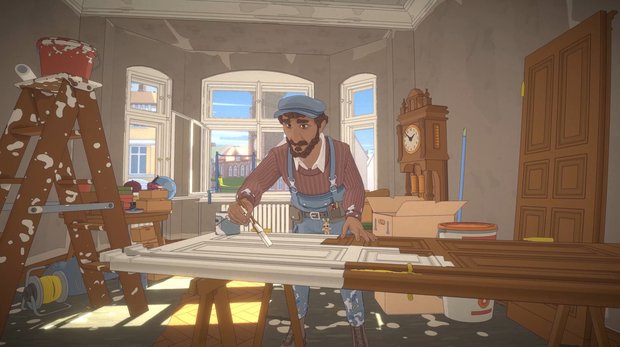
The game is divided into four chapters, connected by a story arc. Each chapter takes place in a different year, from 1989 going back to 1933, but it begins in 2020. A handyman named Malik is tasked with refurbishing an apartment during the COVID-19 pandemic. Since school is closed, he is accompanied by his daughter, Dilara, a child of about 8-9 years old. As Malik is busy with all the hard work, Dilara explores the many rooms, occasionally helping him, occasionally playing or getting bored. As she rummages through the piles of rubble and building materials, she discovers some artifacts, each of them dated with a different historical period. As Malik tells her the story behind them, their related chapters begin. When each chapter ends, we return to Malik and Dilara.
The game does not stray outside of the same apartment, except for one occasion during a flashback, and the items are found scattered across its different rooms. There is no specific point, or action, which leads to their discovery, just thorough exploration. They can be hidden behind wall tiles, or buried in a pile of rubble. On one or two occasion, Malik’s instructions guide Dilara, but on others you just have to go and look for them, in true treasure-hunting tradition.
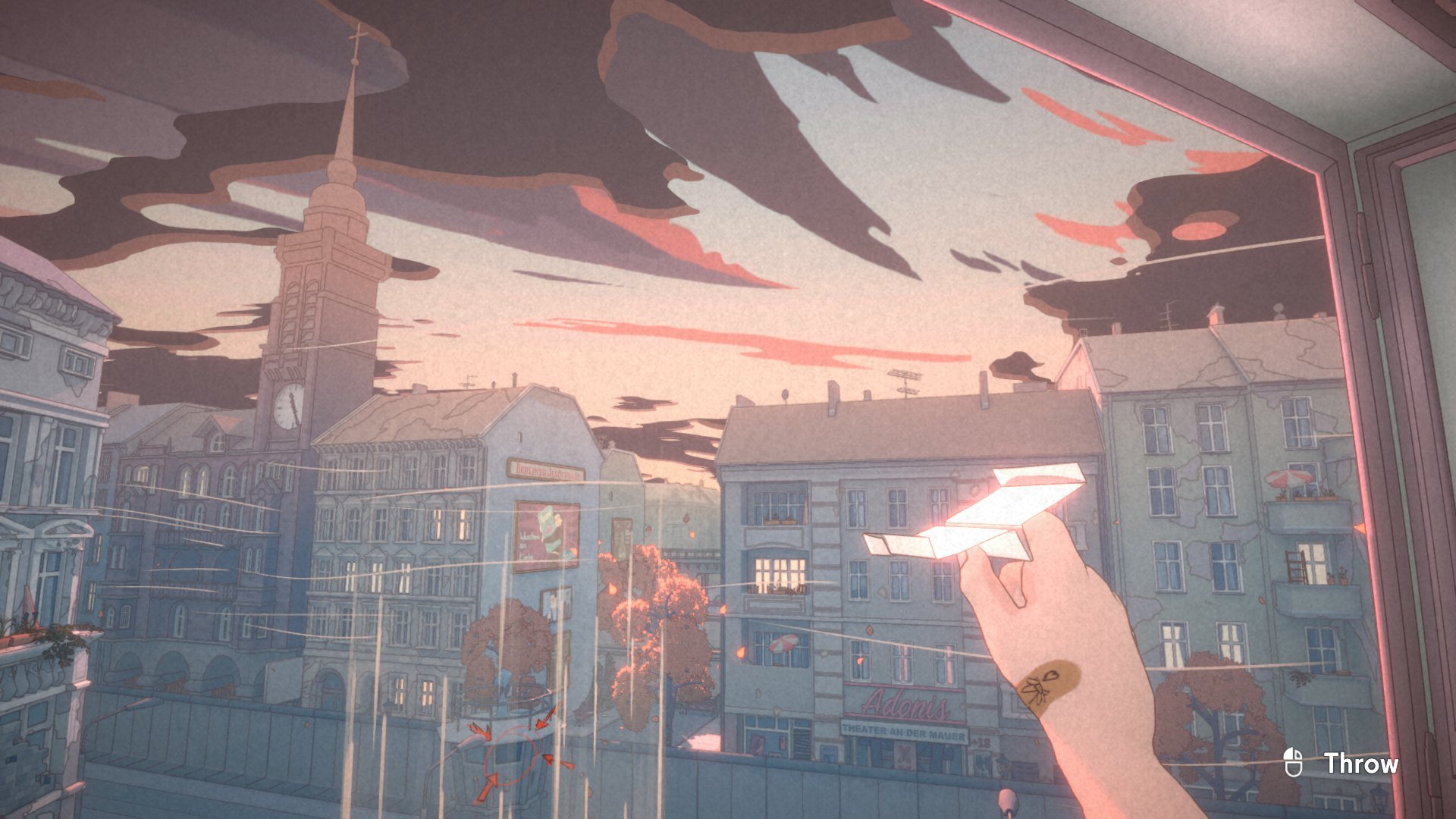
The subjects of the chapters vary. The first is set in 1989, just a short while before the collapse of the Berlin Wall and the unification of Germany. You play as Kolja, a young, unemployed student in East Berlin with a real love of plants. His roommate has left without notice and for no apparent reason, leaving behind a messy space and some unpaid bills. As Kolja tries to sort things out, a paper plane lands in his living room. This leads to an exchange of more planes carrying letters and drawings between him and an unseen woman from the Western side. Together they discover that they have a lot in common, hoping that one day they will be able to simply cross the street and visit each other.
The fourth chapter is set in 1967, during the Cold War at a time of political unrest. It deals with Antonia Zielinski, daughter of a famous sci-fi writer. She is on the verge of finishing her second novel but has to deal with insistent censorship and thought control while trying to emerge from the shadows of her father’s fame. Her apartment gradually turns into a surreal combination of an ordinary city dwelling and a space station, complete with robots, core engine, and asteroids seen from the windows. As she tries to gain control of the symbolic space station, she weighs her options for finishing her book, aware of the limits imposed by censorship.
The game is presented in realistically detailed yet almost cartoon-like 3D graphics from a first-person view. You can move freely around the apartment, as Dilara or as any other protagonist during their respective chapters. As Dilara, you get to search the many hidden corners, open doors and drawers, paint some walls, break ceramic tiles, build a cardboard castle or play bowling with some empty paint cans. As other historical protagonists, you get to put up Christmas decorations, organise clothes in a suitcase, water some plants, make dinner out of leftovers, take a part in writing a novel, annoy the grumpy neighbours… and you also get to navigate the long corridors of a surreal space station while looking for a good, relaxing cup of coffee.
None of the actions is difficult or complicated, blending seamlessly with their stories. Characters and actions are controlled using either keyboard and mouse or a controller. Key points are marked by unmissable dots when you draw near. Whenever a character has something to say about an object, a speech bubble appears; click that and you will hear the commentary. Some actions require you to move your hand or operate machinery in a certain direction. On such occasions, small arrows appear next to their hotspots, indicating which way you should move your mouse. Folding a paper plane, for example, requires moving the mouse in a certain order of directions. Likewise for opening a can of soup, operating an airlock or pressing a handle. Throwing a paper plane, on the other hand, requires you to aim, taking into consideration wind direction and airflow (marked by delicately flowing thin lines), and then releasing it and hoping for the best. (This part can be skipped after three trials.)
The Berlin Apartment
| Genre: | Drama |
|---|---|
| Presentation: | Realtime 3D |
| Theme: | Cultural, Historical, Memories |
| Perspective: | First-Person |
| Graphic Style: | Illustrated realism |
| Control: | Direct Control |
| Game Length: | Short (1-5 hours) |
| Difficulty: | Low |
| Gameplay: | Exploration |
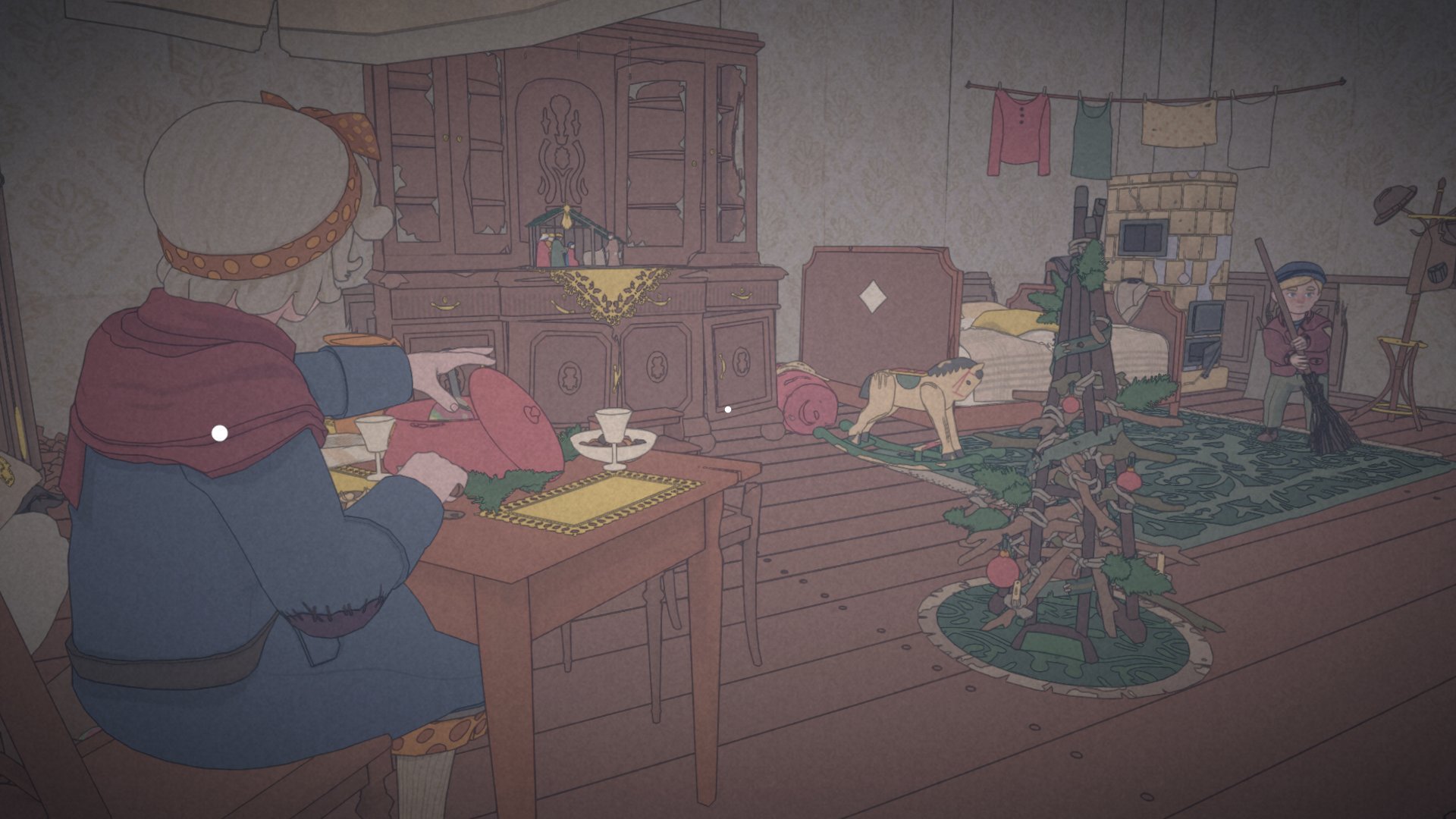
The main objective of each chapter isn’t clearly stated at the beginning; instead it becomes clear as the story progresses. In 1933, a former cinema owner named Joseph walks through his apartment one last time before leaving for France, reflecting on the happy memories he shared there with his family. As the chapter continues, it becomes apparent that he must pack his belongings and leave quickly before Nazi officers arrive to arrest him. In another chapter, the goal is to prepare the apartment for Christmas dinner by putting up decorations, cleaning the floor, and setting the table. Once the objective is completed, the chapter comes to an end.
While The Berlin Apartment features a strong focus on narrative, it’s not so much a visual novel as a collection of interactive novellas. Each chapter tells its own different story, connected only by their shared location. The novellas themselves are intentionally incomplete, as we only meet the characters for a brief time, glimpsing one point in their lives. Each chapter has enough of a story to be developed into a full game in its own right, but it’s up to the player to imagine everything else.
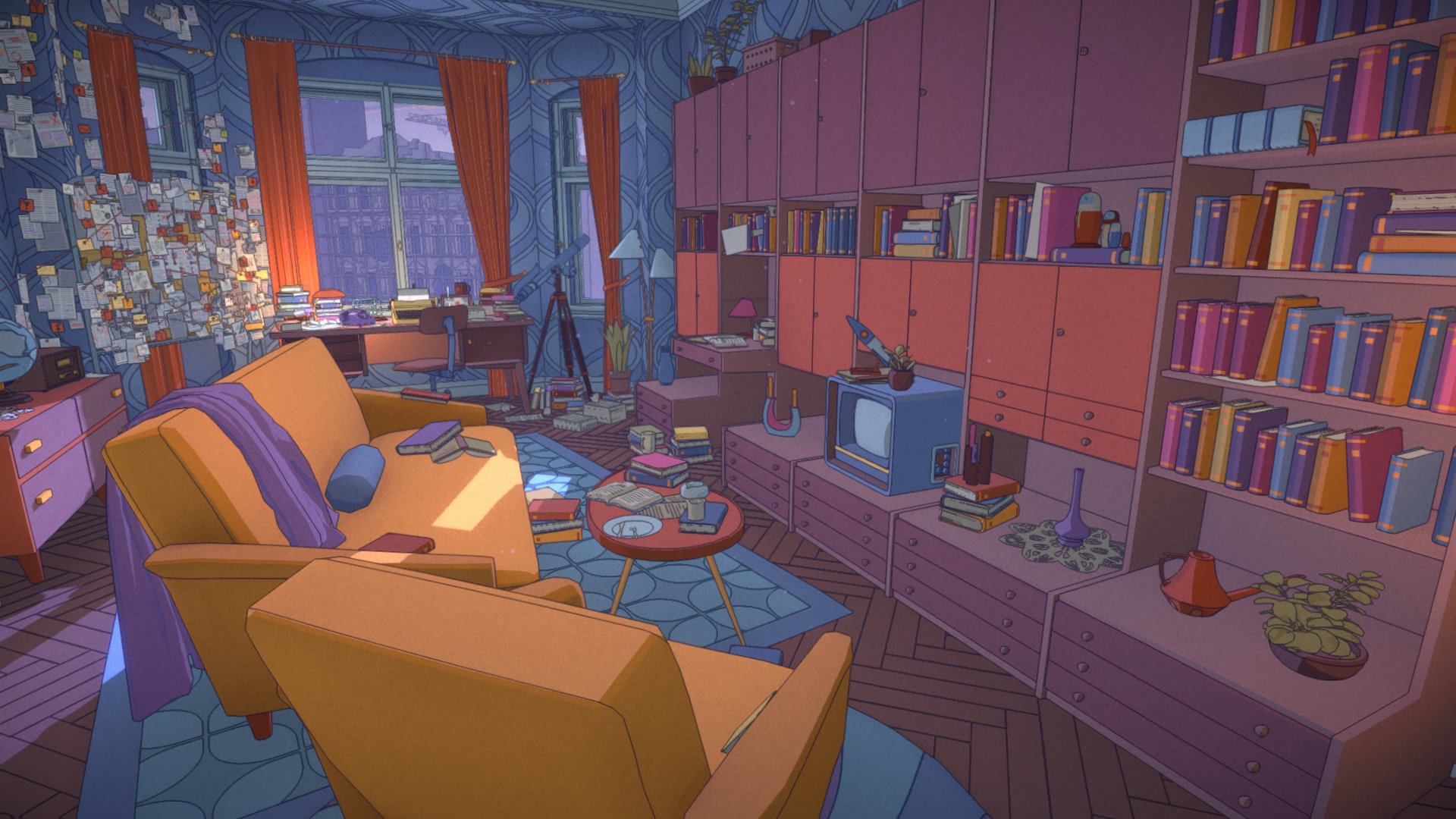
The fragmented nature of these flashbacks sparks curiosity about the characters and what happened before we met them and after we leave them. Still, even with limited exposure to their lives, the characters here are well-rounded, relatable, and feel truly human. They convey real, observable emotions, like happiness, confusion, nostalgia, despair, sadness and hope. We learn about them from small details in dialogue, or through their comments on certain items, like the movie reels in Joseph’s apartment.
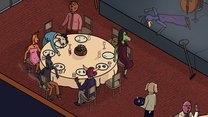
Great voice acting adds credibility to these characters. From the childish playfulness and curiosity of Dilara (her name, of Persian origin, means “heart’s delight” and indeed she did find a place in my heart) to the old and gloomy Joseph; from the light-hearted Kolja to the bewildered Antonia, each character feels real and fleshed out. The actors convey genuine emotions, in some cases infusing their characters with several at the same time. For example, Christmas dinner in 1945, just after WWII: In a half-ruined apartment with boarded-up windows against the bitter cold, a mother and her two children sit at the table, trying to enjoy a meagre holiday meal. The father is away at the front, with no news of him for a long time. They try to lift each other’s spirits, but they miss him, real food, and the peaceful life they once had. Tired and sad, almost desperate, they still cling to hope as the evening becomes quietly magical.
Special mention should go to Erich, Kolja’s talking goldfish(!), which sounds like the stereotypical humorless, sarcastic and efficient Prussian official who is so full of himself. He made me laugh several times over the course of the first chapter. I hoped he would make a cameo appearance every now and then, or even become a recurring character, connecting the different chapters, but unfortunately he did not.
The game can be played with either German or English voice-overs. I played the English version, and as good as the acting is, I do have one issue with it as most of the characters (except for my beloved Erich) do not sound as if they are German. Their North American accents are almost without flaw, without any hint of foreign speech habits when speaking a second language (such as confusing “V” and “W” or using German syntax with English sentences). My ears felt there was something amiss, but it did not affect the overall experience.
The final chapter ends when the apartment is fully refurbished and Dilara has put all the items she found in a time capsule. Clicking on any of them at this point enables you to “remember” (i.e play the relevant chapter again), though they’ll play out the same way each time. Then she and Malik think what should be done with this box, and make a surprising decision.
The game’s denouement sees Malik and Dilara leave the apartment, chatting happily as they go to get ice cream… then the credits appear. I expected a sort of a Hollywood-style ending, bringing together all the characters, tying their stories together, or at least providing noticeable hints about them. Without that, this ending felt like a bit of a letdown, but it seems logical within the game’s concept. It marks the end of Malik and Dilara’s part, and those who came before, but opens the door for new tenants who will write the next chapters in the story of the apartment. It conveys a sense of continuation, as if the stories hiding within these walls are many, and will never end.
Final Verdict
Driven by compelling storytelling, believable characters, and attention to historical detail, The Berlin Apartment delivers an engaging and intimate narrative that highlights key periods of the titular city’s past across nearly a century. Though there isn’t much in the way of challenge, it offers an innovative and absorbing way to explore history, perhaps even sparking curiosity to dig deeper into each era, and its accessible gameplay keeps the focus on the story rather than complex mechanics. If not quite a must-play, it’s certainly highly recommended.
Hot take
The Berlin Apartment feels less like a traditional game and more like an interactive story, but it’s the everyday personal moments that make experiencing its shared place and the lives shaped by history more powerful.
Pros
- Offers personal perspectives on key historical events
- Low difficulty level makes it accessible to all gamers
- Very good voice acting and believable characterisations of people, time and place.
- Change of eras keeps things fresh despite being set in one major location
Cons
- Slow pace, mundane tasks and lack of challenge may not appeal to some gamers
- English voice acting shows no traces of German
Eran played The Berlin Apartment on PC using a review code provided by the game's publisher.




1 Comment
Want to join the discussion? Leave a comment as guest, sign in or register in our forums.
This isn't my type of game, but it's cool how the subject matter in videogames has expanded in the last decade or so to include ideas and subject matter that would previously have only been found in art films and books, with adventure games at the vanguard of this broadening of themes.
Reply
Leave a comment