
Radiolight review
- 0 Comments

Could use some fine-tuning but has an immersive supernatural-tinged forest mystery to uncover
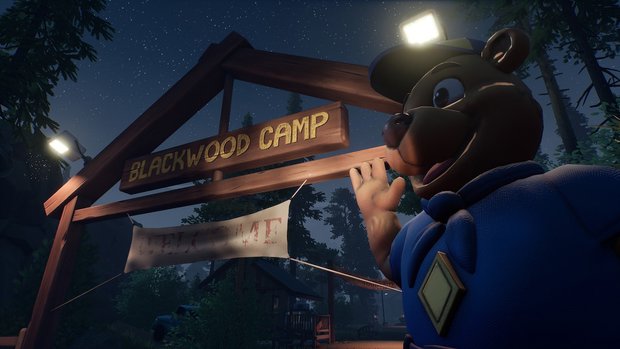
I live near one of Belgium’s beautiful national parks and often go hiking there, but no way would I ever dare enter that park at night. Then again, I’m not a dutiful police officer sent to investigate some strange disappearances happening there, like the setting of solo developer Krystof Knesl’s Radiolight. I’m glad I braved that journey, though, as its beautiful scenery pulled me along for miles, and its creepy atmosphere and many surprises kept me glued to the screen like a bear to a honey tree.
Fourteen-year-old Elliot Laire vanishes from his tent in Ashwood Creek National Park during a scout camping trip. Four days later, playing as police officer Ethan Collins, you respond to a call there to look into another disturbing case: Park Ranger Harvey Waters is no longer answering radio calls. Armed only with a flashlight and your own radio, you must venture deep between the trees and granite cliffs in search of the man. Very soon, though, you will discover that there is another kind of darkness in these woods that the police academy never prepared you for.
Radiolight is a first-person, free-roaming adventure in the vein of Firewatch, but with a supernaturally tinged 1980s thriller vibe. Here we find ourselves in Oregon instead of Wyoming, and Delilah has been replaced with Ethan’s childhood friend and Chief of Police Robert as your lifeline to the civilized world. You can call him up whenever you uncover something interesting to report, like an abandoned backpack or blood on a rock; simply look for a walkie-talkie icon to pop up when interacting with the environment. You can also inform Robert of mundane stuff – much to his annoyance – like random pieces of litter or the stellar view from the lookout point.
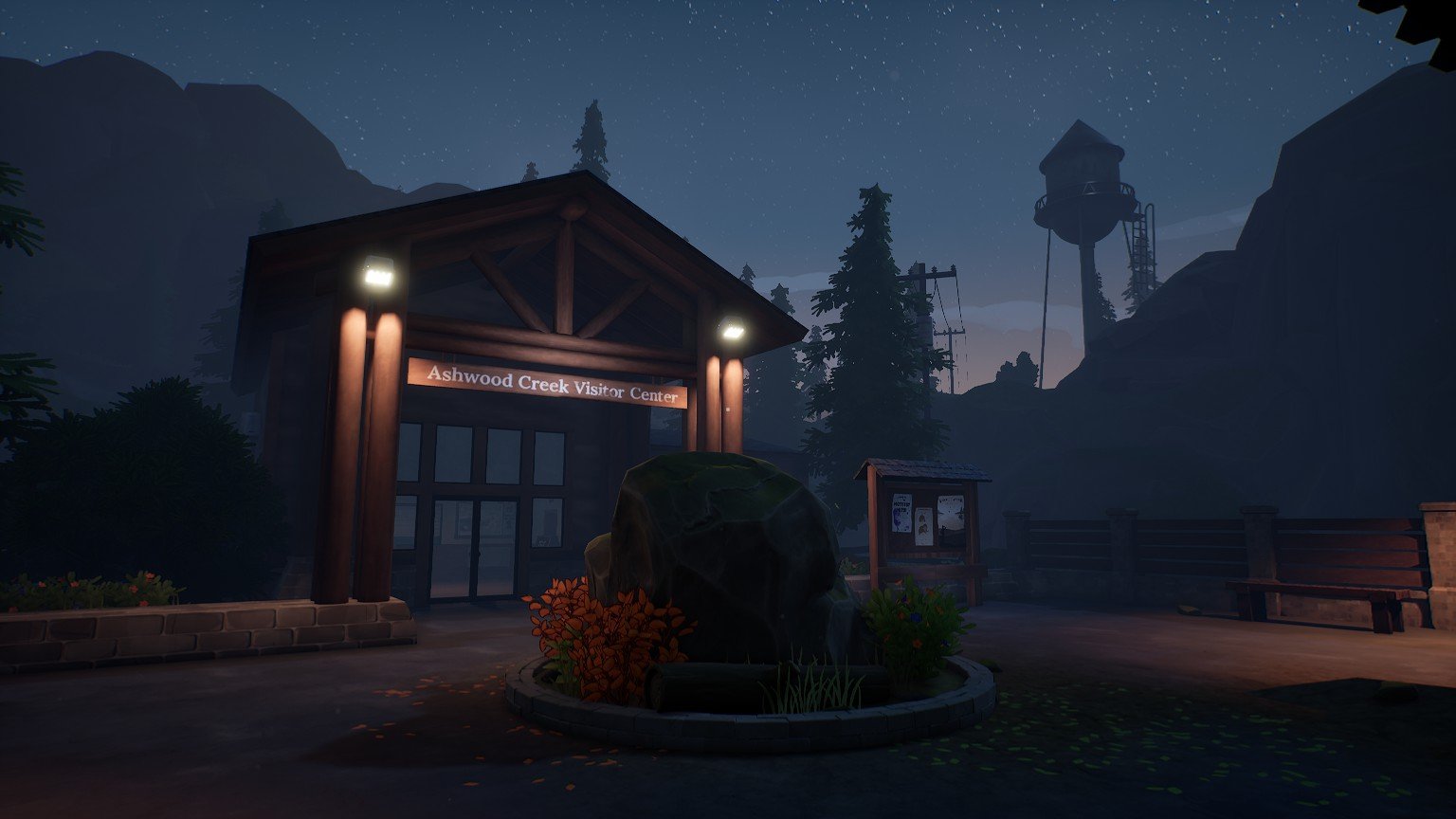
Despite the surface similarities to Firewatch, however, Ashwood Creek holds many more secrets and mysteries than the Shoshone National Forest, making it feel more like Kona in that respect. Your investigation takes place during a single night, and as you discover more and more evidence of foul play, the weirdness factor starts to rise to such levels that you could very well imagine yourself as Twin Peaks’ Special Agent Dale Cooper compelled to enter the Black Lodge (another obvious inspiration for Radiolight).
Warning signs and rock formations suddenly bear writings and strange markings. Kids or vandals, you think at first. Then the messages take on more of a cult implication, with the recurring drawing of an ouroboros at the center of it all. And indeed, you also begin to find documents referring to a mysterious community that used to live somewhere in these woods – and perhaps still does.
Before all this madness ensues, however, you start out in the comfort of the Collins home as a kind of tutorial to get a grasp of the basic controls. You can play Radiolight with the keyboard/mouse combo but I used a controller instead, which always feels more natural to me when it comes to first-person 3D exploration games like this one.
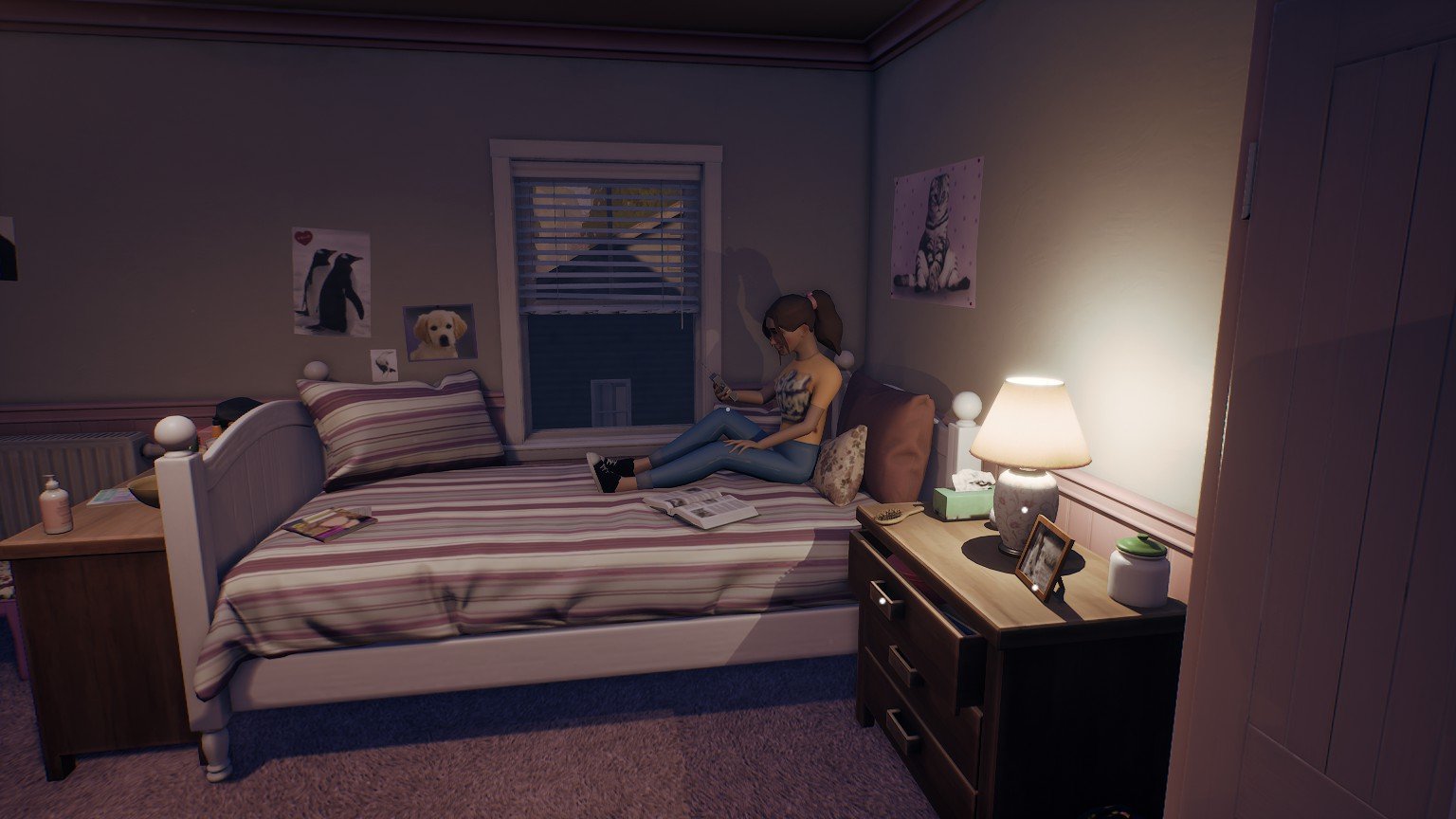
Ethan is divorced but has part custody of his daughter Mia, who recently turned eighteen. She likes to play her music loud, so tonight you go to admonish her before the neighbors can complain again. Mia is chilling on her bed, twiddling with a handheld AM/FM transistor radio, which she gives to you after her interest wanes. Next to your police issue walkie-talkie, this radio becomes your most important tool during your search of the woods. Not only to pick up on strange signals, but also to interfere with weird force fields blocking your path, and even to fight off a demon-like entity. But more on these crazy gameplay elements later.
Also in Mia’s room, you are introduced to a recurring element throughout the game: the boom box on her desk. Interactive hotspots like this are indicated by a white dot. Move close enough and the center cursor will show what you can do with it: examine, pick up, and in the case of these boom boxes, turn off and on. You can even play some tapes you can find – though during my playthrough I apparently broke the deck because I couldn’t switch tapes after playing the first one, or turn the device back on.
Once in the woods, you will see more of this type of boom box scattered throughout, on picnic tables or inside cabins. They will be playing some 80s music on the radio, though no tunes I could actually recognize. Some of them will suddenly act up, projecting weird sounds. When you align your handheld radio to the same frequency, strange things will happen, like mysterious voices delivering cryptic messages. Sometimes you can engage them in conversation, but good luck making sense of them. It’s all part of the ambience and the mystery.
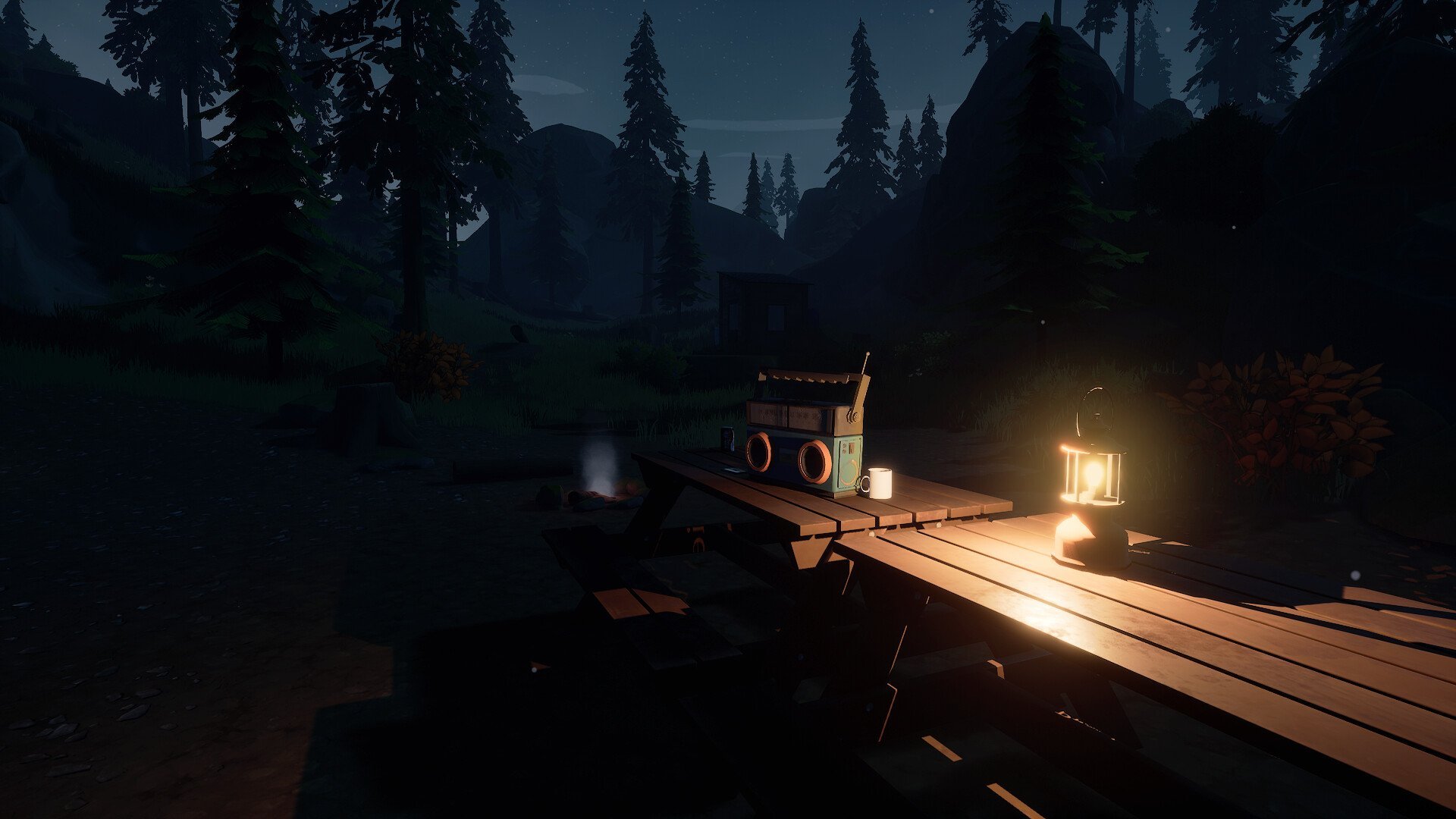
I did notice some technical glitches concerning these boom boxes, unfortunately. Sometimes the cursor label would show “turn on” when it was already playing music. The same glitch occurred with certain doors; even though they were already shut, the label would show “close” instead of “open,” or the other way around. While not a big deal, this meant I often had to interact with them twice before I got the desired result. Another graphical oddity had me rotating many of the documents I found until I was actually able to read them, since mostly the text was out of focus otherwise. I could only make them out clearly when I tipped the paper closer to the edges. Some documents allow for alt-text, but not all of them, and the inconsistency was disappointing.
There are no real puzzles to solve in Radiolight, except for finding the right keys or equipment to get past obstacles. For instance, your path will be blocked by dense shrubbery, so you will have to look for something to cut it down with. Later on, I found a pair of wire cutters, so I was sure I would stumble upon a fence at one point. And lo and behold, I truly did! It is possible to get stuck for a while, though, because progress is very linear. Even with the park presenting a wide open world to explore, cutscenes and story advancement will only occur if you have seen what must be seen, even if not every item or document immediately seems important.
For example, at one point I found myself at the camping site where Elliot disappeared and my progress was blocked by a locked door of one of the wooden cabins used by the search party. I couldn’t find the key anywhere, or any other means to get past. Finally I picked up a small note tucked under a dinner plate in the camp’s cafeteria, which didn’t really hold much information. I hadn’t bothered before because I was looking for that key. After I read the note, I decided to take another look upstairs, even though I had already done that a couple of times already, because what else was there to do? This time a cutscene did trigger, with no logical explanation why it would only happen after reading said note, and things like this make the game feel a bit too linear.
With the click of a button, you can open up the inventory menu, where you can choose between your larger tools, smaller items like a box of matches, any keys you might find, and some – yes, only some! – of the documents you have found and would like to check again. Though you really have no reason to bother, as the few things stored there don’t hold any information important enough to require a second look.
Actually choosing an item from this inventory also felt quite clunky to me, and navigating it with a thumbstick is perhaps one of the drawbacks of using a controller. So I was both surprised and very thankful that in practice, when walking up to a locked door, for instance, Ethan would automatically use the correct key anyway, and the tools most often needed (the map, flashlight, axe and both radios) can be accessed by pressing the designated hotkey or controller button, leaving no need to actually go into that inventory system at all.
Radiolight
| Genre: | Horror, Mystery |
|---|---|
| Presentation: | Realtime 3D |
| Theme: | Paranormal, Missing persons |
| Perspective: | First-Person |
| Graphic Style: | Photorealism |
| Control: | Direct Control |
| Game Length: | Short (1-5 hours) |
| Difficulty: | Low |
| Gameplay: | Exploration, Search |
The map you get as you enter the park will help you orient yourself, at least at first. Next to the important landmarks, hiking trails and the many cabins and utility sheds used by the rangers, it also displays a little red dot that indicates your position, almost like a GPS tracking signal. (I have no idea how that works on a purely paper object; let’s just call it video game logic.) Bringing up the map also shows your current objective again.
Many of the buildings you encounter are locked but not always intuitively opened. The first time this happened, I spent a lot of time searching around for a key. When I couldn’t find one, I continued on the path only to find my way blocked by a huge fallen tree. I had to backtrack, at which point a nearby boom box – innocent enough on my preliminary examination – suddenly spouted out a conspicuous buzzing static. Tracking the signal with the handheld radio caused a trembling sensation as a strange voice seemed to speak by splicing together fragments of other broadcasts, and suddenly the shed’s door flew open of its own accord.
The second time I was in need of a key, my buddy Robert informed me over the radio that there was a spare hidden beneath a rock with red markings. I probably started my search in the wrong place and headed in the wrong direction, since it took me quite a while to locate that stone, truly bringing me to the verge of giving up. Talk about pixel hunting!
What happened next, though, raised the excitement to another level. A rather violent event caused Ethan to wake up with no idea where he was. This effectively rendered the map useless, since it no longer featured the red dot indicating my location. (It did return later, when I had once again reached familiar territory.) Suddenly I felt like I was in more danger, not so much of getting lost, but from falling victim to whatever forces haunted these woods, without knowing which direction I should run if something attacked me.
And attack me something did. A giant black shadow with red glowing eyes and antlers, a demon of the woods I had already glimpsed from a distance a couple of times before but had blamed on my too-active imagination, suddenly crawled out of the ground and started chasing me around. For a while I had no idea what to do. Ethan couldn’t run away, trapped inside a magic circle of stones, and I had no weapons. The demon would catch me, the screen would turn black, and I would respawn at the start of the scene for another try.
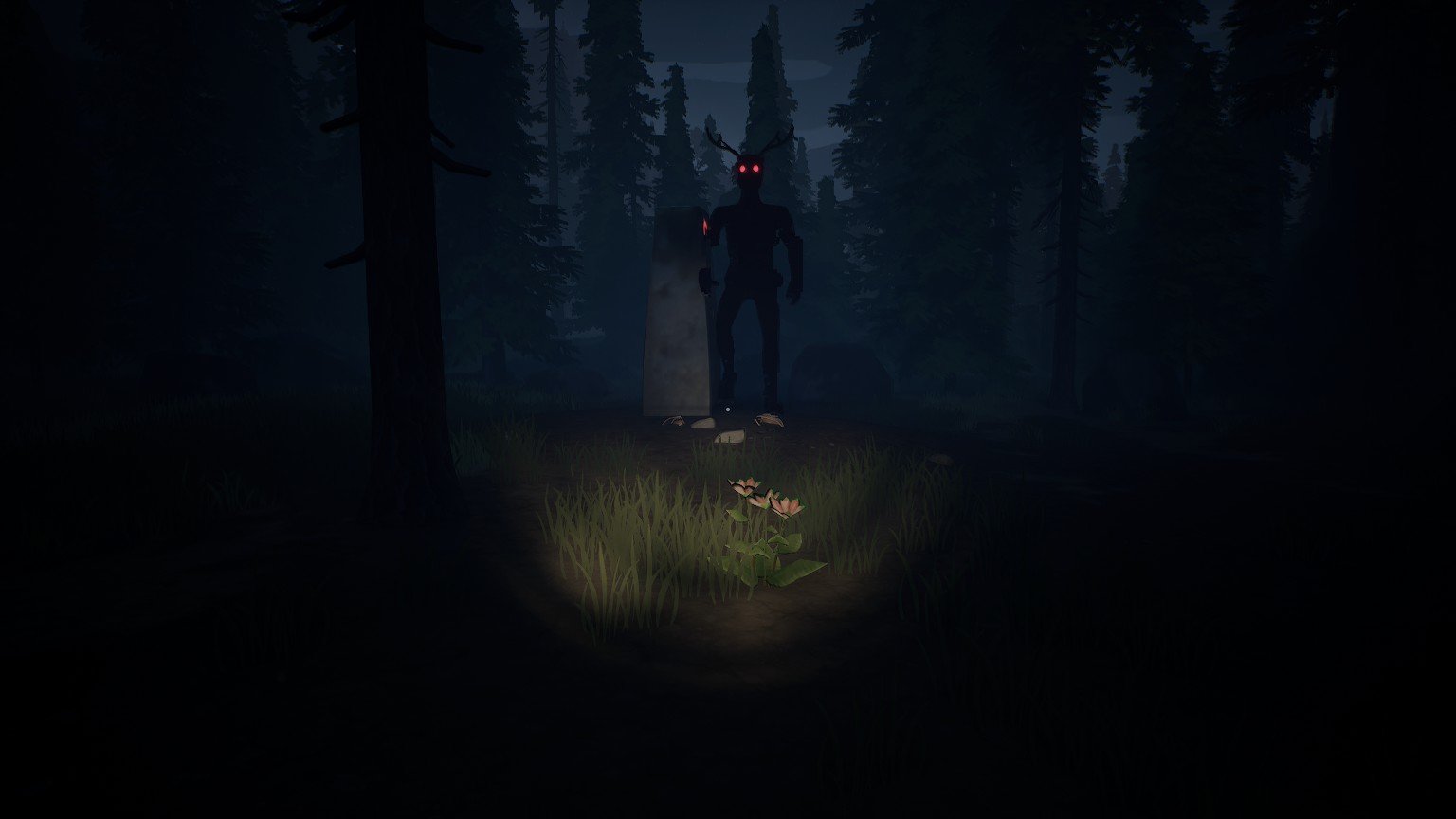
After running in circles and dying that way about five times, eventually I checked a walkthrough to learn about the extra functions of that little transistor radio. It turns out the radio is able to release a static noise that interferes with the demon’s wellbeing, ultimately vanquishing it when activated enough times. In the end, I quite liked this bit of gameplay, though there really should have been some kind of indication from the start of what needed to be done.
The same thing happened with force fields. Suddenly my path would be blocked by a kind of outwardly rippling field, as if someone had thrown a rock into a pond, except vertically. Here as well, I had to find the correct frequency on the transistor radio to not only dispel the force field, but also – much to my surprise – trigger some kind of flashback scene showing blue people, memories from the past, talking to each other while still frozen in time. These scenes slowly reveal the truth about what happened to both young Elliot and Ranger Harvey.
As is often the case with these kinds of mysteries, even with these glimpses into the past not everything is explained and Radiolight ended with me still only having an inkling of what really transpired. There are clear supernatural elements in this story, but it’s also partly a case of science gone wrong. Yet even with several questions remaining unanswered, I can honestly say I immensely enjoyed this five hour quest to ultimately save a young boy – almost entirely due to its great production.
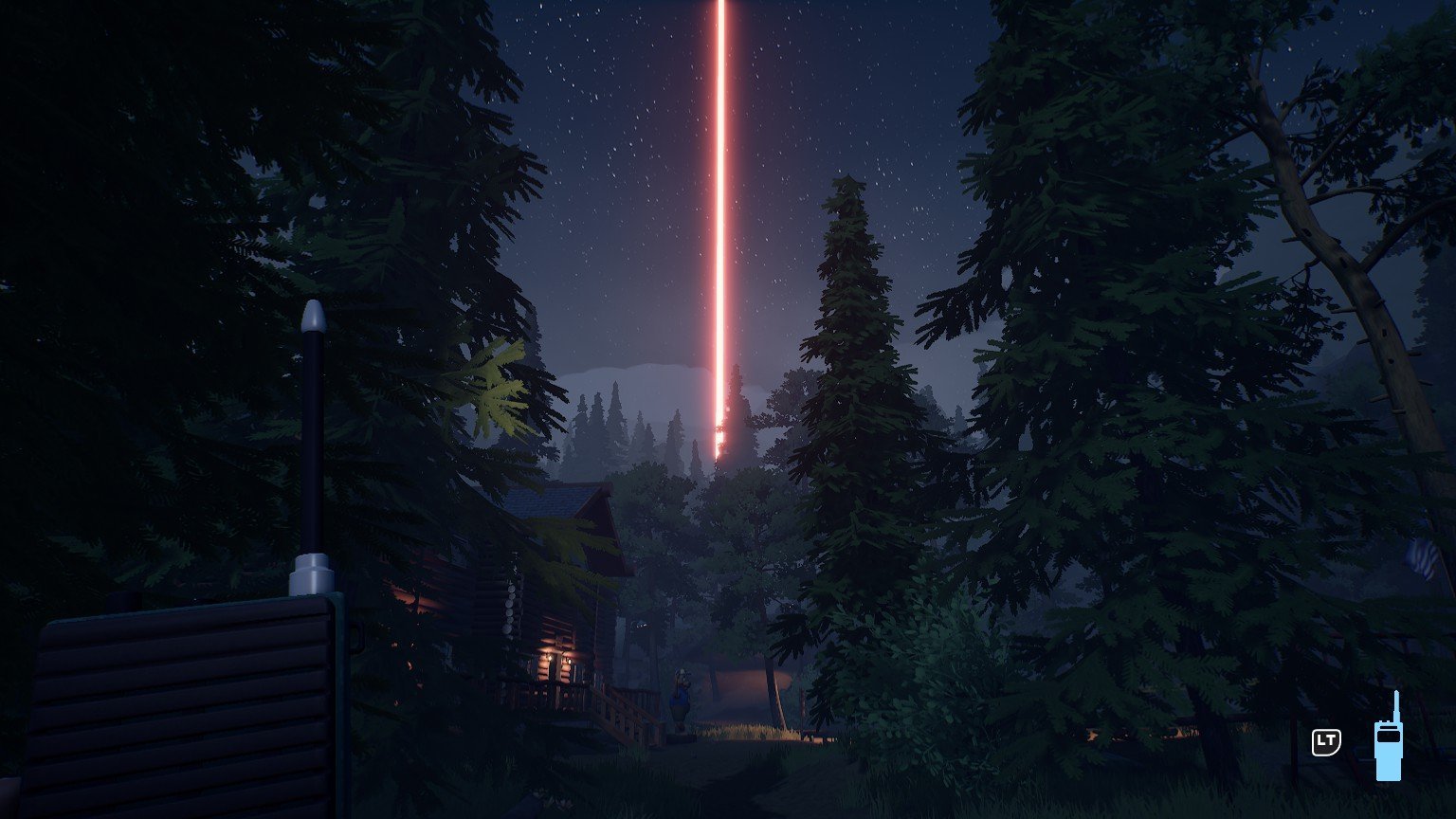
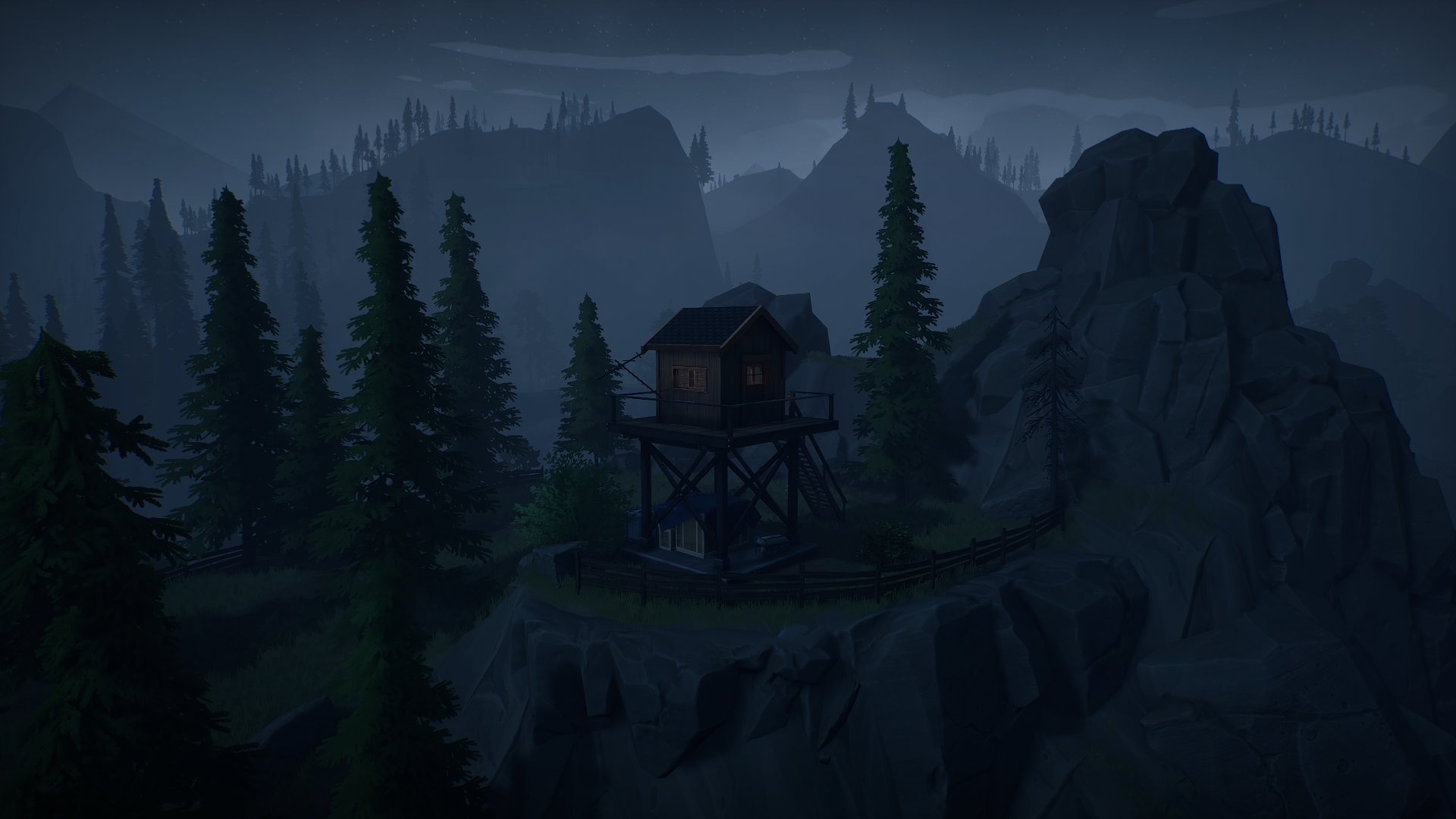
While there is a running function – you will also crouch and jump – most of the time I roamed Ashwood Creek National Park at the standard walking pace because I was so enamored of the beautiful vistas this game has to offer. While not hyper-realistic, I totally lost myself in this fictional world as if it truly was real. It’s a starry night but there are also some clouds and a full moon shining down. My favorite sights were the views over the lake, with pine-covered mountains on the opposite shore; the impressive lookout across the valley from the ranger’s tower; and the huge caverns within the cave systems. Only the streams, waterfalls and the smoke from a cabin’s chimney didn’t convince me graphically that they were real, and when searching through a cave system I noticed the pattern of the stony ground looked a bit too photoshopped.
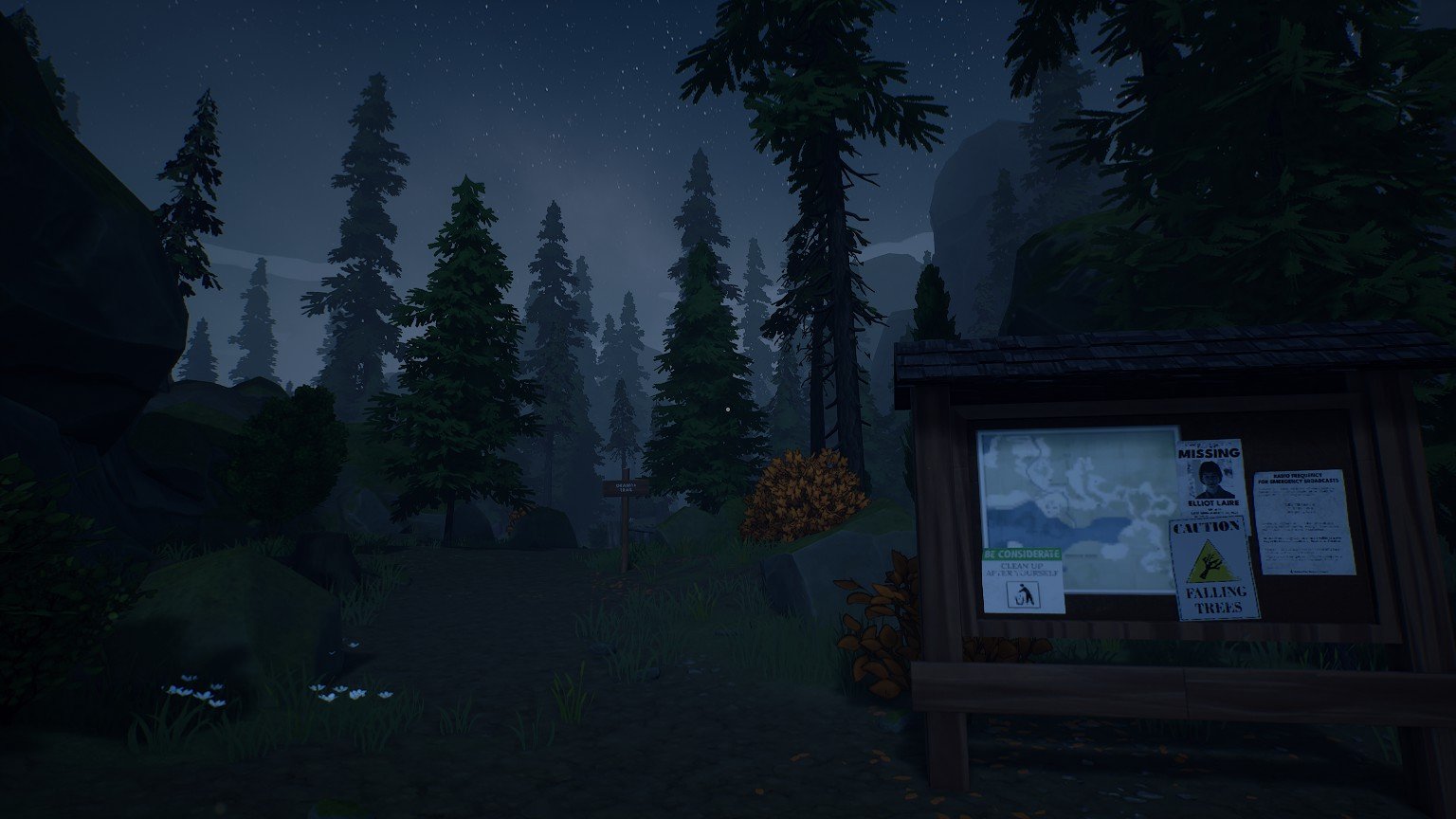
The only thing that really bothered me about the graphics, though, was the human characters, both in the flashback visions and in present day, such as the caretaker of Blackwood Camp. He especially contrasted badly with all the photographs and realistic drawings you uncover, as mementoes on desks and in drawers, and of course Elliot’s “Missing” poster plastered to every other wall or noticeboard. On the one hand you have all this photographic evidence of what appear to be quite natural-looking humans, yet this guy looks almost like a Jimmy Neutron character. Although brief, coming face to face with this caretaker totally ripped me out of the game.
More impressive than the largely excellent visuals were the sounds of an actual forest at night that surrounded me – I definitely recommend playing Radiolight with headphones! My footfall changed depending on whether I was walking on gravel, wood or grass. The rustling of leaves, snapping of twigs, and small rocks falling constantly had me looking over my shoulder, or up in the trees, or at the top of a cliff, expecting every moment to see someone or something stalking me. There are hooting owls and other birds, chirping insects, the roar of a waterfall, and at one point I was sure a bear was growling at me from the shadows, ready to pounce (though I never got to see it).
The voice work is amazing too. It’s a very good cast: Ethan and Robert have great chemistry, and Ethan in the lead is very believable as a police officer and father trying to do both jobs to the best of his abilities. He’s trying to atone for past mistakes while battling all the strangeness he encounters this night, concerned about coming across as drunk or crazy over the radio. He is brought to life by Steven Kelly, who has also done voices for Beyond the Edge of Owlsgard and The Excavation of Hob’s Barrow, among other games, while Robert is voiced by developer Krystof Knesl himself. The extra characters you hear, mostly during flashbacks, including Scout leader Luke Jenkins and the anonymous leader of the cult, fit right in with the realistic yet supernatural experience.
It’s a great overall aesthetic package, especially for a lone developer, finished off with a typically synth-heavy 80s-inspired soundtrack, going from mellow, almost relaxing tracks to faster rhythms with a heartbeat-like bass when things get exciting.
Final Verdict
If you can’t get enough of weird 1980s supernatural fiction, Radiolight has it all: dark woods to explore, a mystery to uncover, and strange radio signals messing with the physical world. Graphically stunning for the most part, with realistic sound effects, a great voice cast and a highly atmospheric soundtrack, it’s good for five or so hours of exploration spent being stunned by so many strange encounters. It’s a bit too linear here and there, but that didn’t stop me from forgetting the actual world around me and getting completely lost in this fictional one. It might have its generic elements, but I thoroughly enjoyed myself as I sat on the edge of my seat the entire way. Not everything was resolved when my quest came to a close, but the ending is a Twilight Zone/Outer Limits type where your own imagination is triggered and challenged to come up with theories for what happens next. If you enjoy supernatural mysteries and are a fan of first-person exploration games with intriguing narratives, you definitely don’t want to miss out on this thrilling hiking trip. Just don’t forget your radio!
Hot take
With only a little interference to enjoyment, Radiolight‘s one-man production offers a supernatural 1980s mystery well worth exploring in a gorgeously detailed yet solidly creepy woodland setting.
Pros
- Dark but beautiful scenery makes you feel truly immersed in this Oregon park
- Creepy sound effects and music add to the tense atmosphere
- Excellent voice acting
- Twiddling radio frequencies makes for fun gameplay
Cons
- Not always clear what you are supposed to do
- Strict linear progression relies too much on specific triggers
- Acquired documents are often out of focus
Johnny played Radiolight on PC using a review code provided by the game's publisher.



0 Comments
Want to join the discussion? Leave a comment as guest, sign in or register in our forums.
Leave a comment