
The Caribou Trail review
- 0 Comments

It’s easy to get firmly entrenched in this powerful character drama on the front lines of World War I
War is hell, no matter what era we are talking about, from medieval sword fights to the threat of nuclear winter. And yet there has always been something fascinating about man’s inhumanity to fellow man that has intrigued me, and nowhere more so than the two World Wars. The Caribou Trail, from the creators of Two Falls (Nishu Takuatshina), follows a regiment of soldiers on the front lines of World War I as they fight for a land they know nothing about, offering an intimate first-hand look at how this “war to end all wars” affected them. It’s a tale of loss and grief, and not one to be taken lightly as it is an emotional rollercoaster from start to finish. There isn’t much in the way of gameplay, but it’s worth playing to immerse yourself at least to some degree in what it must have been like for the common soldier in times of conflict. Though I promise you won’t have a dry eye at the end. I know I shed a tear or three.
Based on real-world events but telling a fictional story, the game introduces us to three young men who have enlisted in the British army: Fisher, Lonnie, and Gordon. They, along with their squad mates, are from Newfoundland, an island province of the British Commonwealth off the east coast of Canada. (While it would eventually become a part of that nation, it is not yet at the start of the conflict.) These men felt the lure to do their part for “king and country” without hesitation, but reality would quickly set in when they are literally dug into the trenches of the Great War. This is their story.
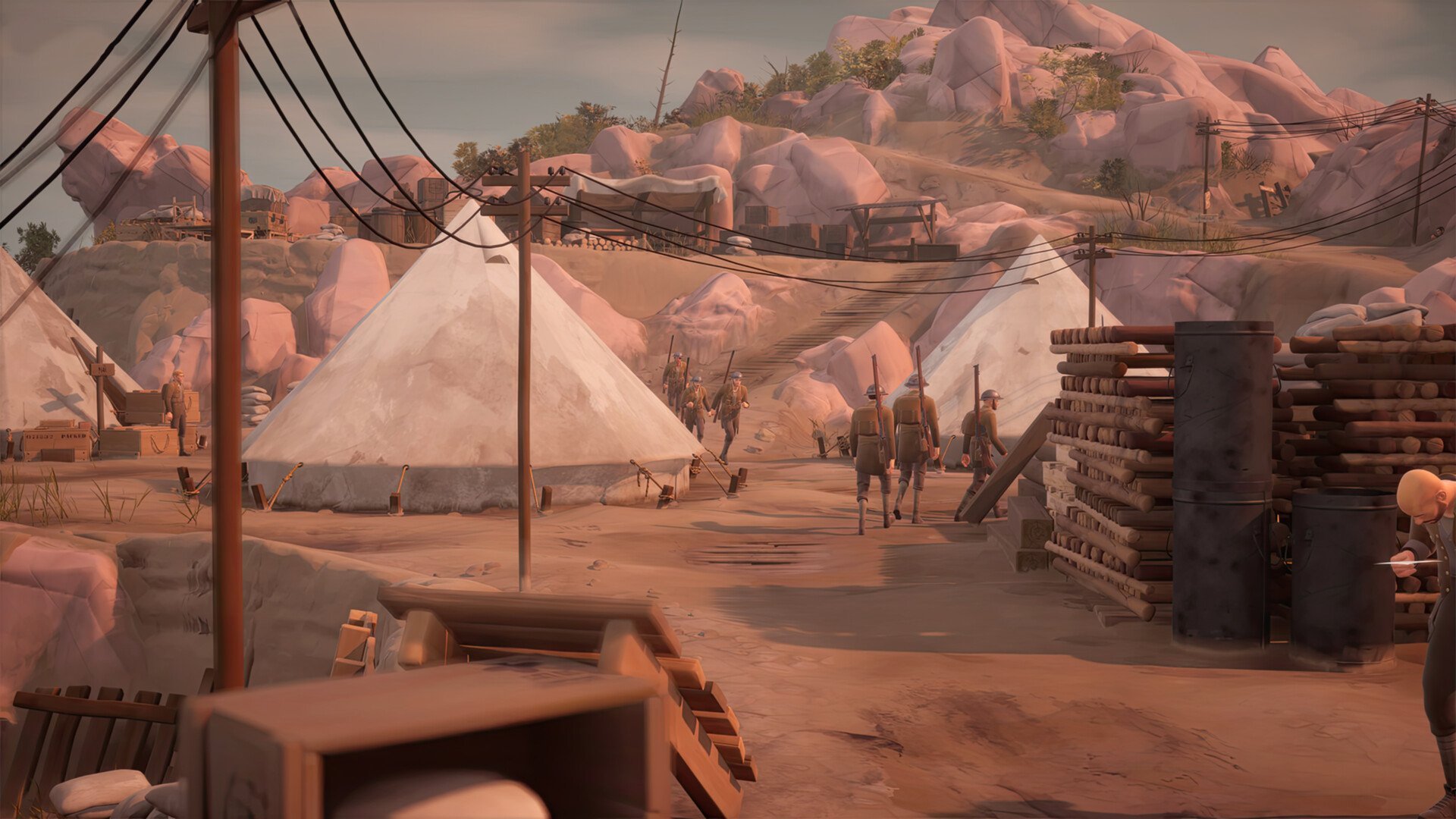
At the start of The Caribou Trail, which takes place at the tail end of 1915, we see our intrepid heroes as they quietly row their way to the sandy beaches of Gallipoli, a town situated smack dab in the country of Turkey, to fight the Ottomans on that front. After being shelled by the enemy, the playable character Fisher regains consciousness at a field station already built for his troop. It is here where most of the game takes place as Fisher wanders the camp, interacting with the other men. There are also a couple forays into No Man’s Land, a sort of neutral zone between the front lines of the Ottoman army and the British landing party, and as one would expect it is a heart-pounding experience as you never know when you’ll get a bullet lodged into your skull.
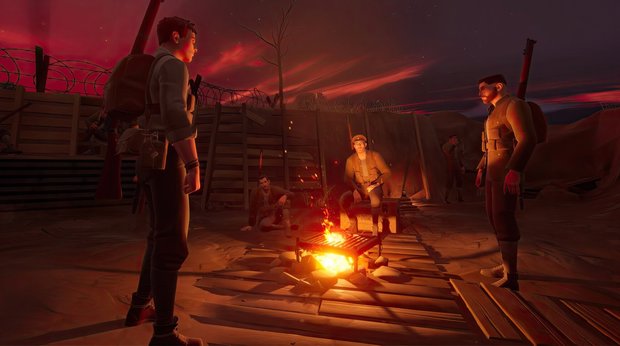
In between skirmishes and roaming the base, we are treated to stories of our three main characters around a campfire as they trade stories from home, and we learn a lot about their fears and past hardships as orphans. I really enjoyed these brief interludes, as they make the men out to be far more human than most war games. They aren’t battle-hardened soldiers; in fact, many of them are fresh off the boat – just normal people in a war they didn’t start but are willing to fight to the end.
Fisher is the cook, and during their downtime he makes a stew of food found throughout the camp. Helping him stir and mash the soupy meal as an interactive sequence adds to the feeling of being there with the other soldiers in the quiet moments between the storms of battle. At first it’s just hardtack and stock broth, but as the game moves forward you can add fish and eventually bacon to make a homeland stew called fish and brewis.
Bringing these characters to life, The Caribou Trail is fully voiced, and we can easily make out the Newfoundland accents of all the soldiers. The troop’s British commander, however, has the stiff stylings one would expect from war movies set in this time period, while the enemy combatants speak to Fisher in Turkish-accented English during a brief ceasefire.
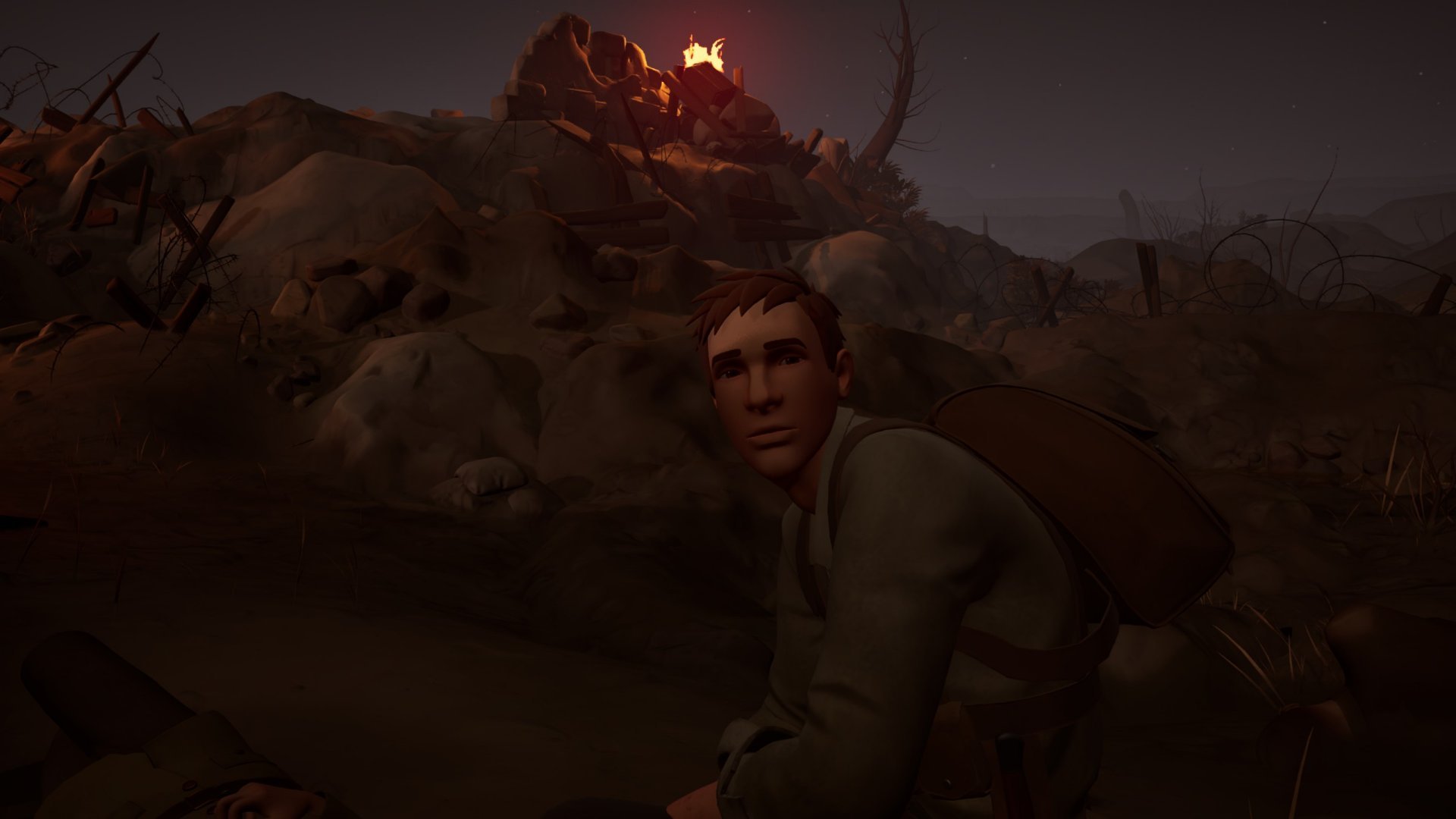
As befits a game about the horrors of war, it’s the audio that really makes the experience stand out. Everywhere we go we are treated to (or tormented by) the sounds of gun and cannon fire, the screams of wounded men, and the simulated rapid heartbeats of stress and fear. The music here also adds an emotional element to a story meant to humanize the conflict of war. While in No Man’s Land, Fisher and his pals are constantly under threat of fire from the Ottomans, the music swelling to a crescendo that set my heart fluttering, desperately hoping they would make it back to the reserve trenches alive. Safe in the British camp, we hear more laid-back music that supports the growing camaraderie between the enlisted men.
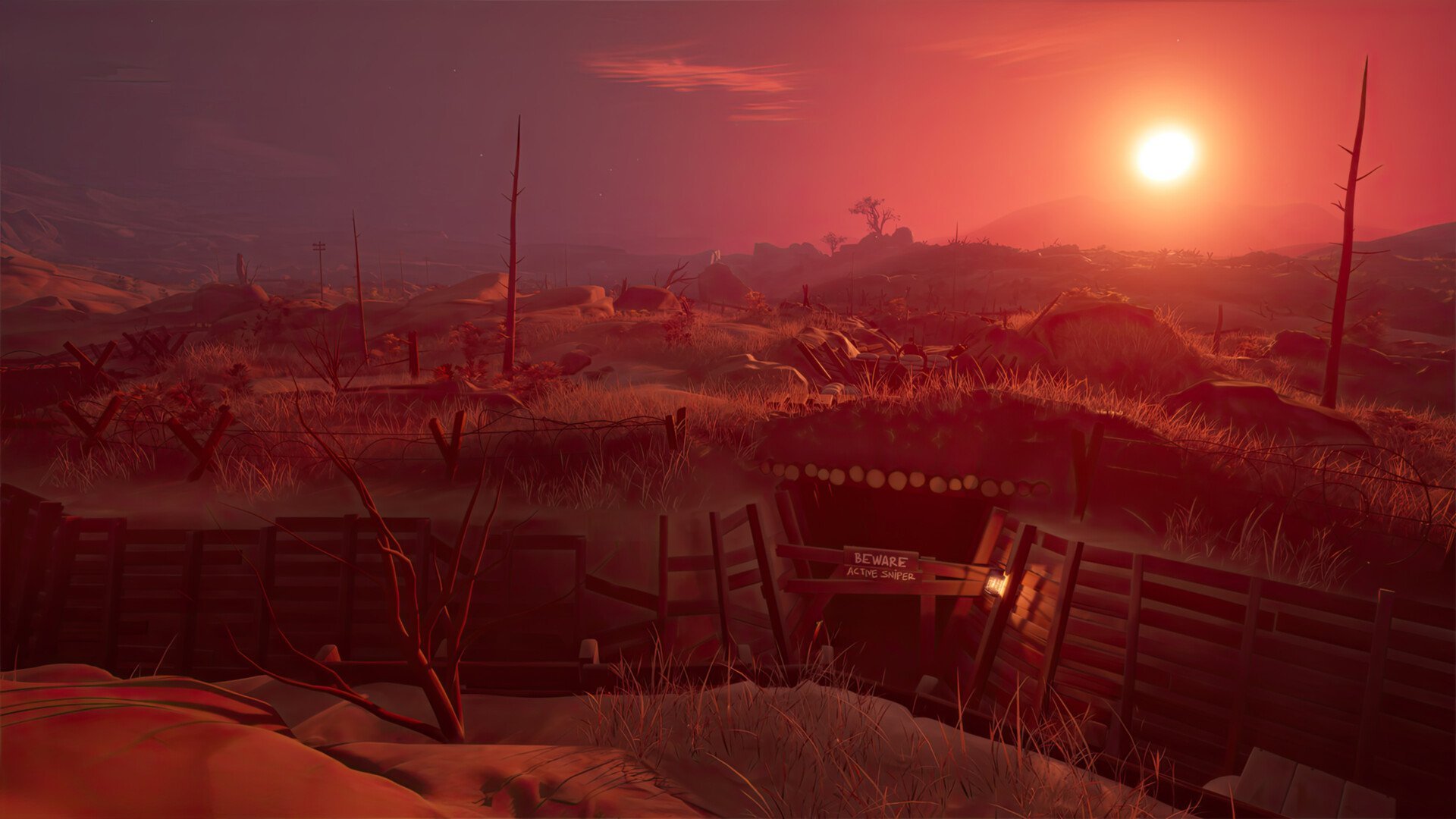
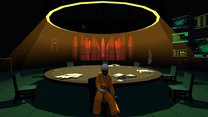
All this is presented in a semi-realistic art style using fairly low-poly 3D graphics. The sand and dirt are on full display, with puddles of water just waiting for someone to step in them and get trench foot. The dead bodies pile up and we see just how brutal it is when charging from the safety of one’s camp to the enemy’s. Trenches are constructed with wooden railings on either side holding the mud walls in place as one keeps their head down so as not to get shot.
The Caribou Trail
| Genre: | Drama, War |
|---|---|
| Presentation: | Realtime 3D |
| Perspective: | First-Person |
| Gameplay: | Quest, Survival, Walking simulator |
| Control: | Direct Control |
| Action: | Chase |
| Theme: | Relationships, War |
| Graphic Style: | Simulated realism |
Set near a sandy beach in the Gallipoli peninsula, the game features lots of browns, tans, and the occasional green of foliage. The action mostly takes place during the day, but there are a couple sequences that play out under the cover of night. Here the darkness is penetrated by reds and yellows of fires and the bursts of explosions that briefly add color to an otherwise drab, desolate battlefield. The sights and sounds of battle, with men running or crawling through the trenches and over dunes, make the conflict seem so real that it almost felt like I was in the trenches right along with the Newfoundland regiment.
While you need to be careful where you go and when, you’re free to move around in first-person perspective using a gamepad, but I chose the keyboard. Movement is simple, using WASD to move and the mouse to look around. Left-clicking on a hotspot either picks up an item or initiates a conversation with another soldier. Holding the right mouse button zooms in while Fisher looks through binoculars. While not strictly needed, it’s fun to look through them to see distant sights up close. We also get a map and compass to help navigate the base camp and trenches. This is literally a map on paper marking your objectives. There’s no mini-map here; you’ve got to figure out the directions yourself.
That may be the game’s biggest challenge, as The Caribou Trail has no puzzles to speak of. And despite being a game about war, there’s actually little in the way of combat either. In fact, with the exception of seeking shelter from the shelling in No Man’s Land, and a sequence near the very end of the game involving a fallback to the water, there is no “action” to speak of. The vast majority of the fighting is done off-screen, serving mainly as a backdrop for a more intimate story about fear and comradeship in a war far from home that nobody on the ground wanted.
There is the occasional side quest that Fisher can pick up while in camp to build on an otherwise linear story. From finding a young soldier’s ID disc (the World War I equivalent of dog tags) to getting some rum to quench parched throats, there are plenty of mundane activities that help bring out the humanity of these young men. Even just digging holes, which is nothing but pressing buttons to breach the ground, pull up the shovel, and then dumping it to the side. Doing such menial jobs could have been boring, but I found them to be relatable tasks that helped me connect to the soldiers. I’d even go so far as to say the stirring and mashing of fish and brewis is a fun mini-game in its own right.
Plenty of collectibles are littered around the camp as well. These add to the lore and history of the Great War and I highly recommend searching for them and reading the descriptions. There’s a lot of interesting trivia to be found about personal effects from the war, as well as letters to the soldiers and other documents. The occasional item Fisher picks up reveals a brief story behind what it was used for in the early twentieth century. We even get some fun facts about the regiment’s homeland of Newfoundland. I enjoyed learning more about the period than perhaps the story itself.
Throughout their ordeals, the soldiers form a strong bond with each other, particularly the three leads. The nature of war is often tragic, of course, forcing the protagonists to confront its devastating consequences in a very personal way. These events all lead to a chilling finale that I won’t spoil but makes for a powerful payoff to the four-hour long experience to get there, making you question what you think is real. The game leaves things open to interpretation, but despite what one concludes, it’s sure to leave a lasting impression on any player.
Final Verdict
The Caribou Trail may be rather short, but it leaves one with a poignant sense of the horrors of war and the toll it can take on soldiers on the front lines. While very much a linear experience that’s light on actual gameplay, the game is all the more immersive by putting players literally in the trenches to understand what life was like there during World War I. There’s no glory here, mostly death, but also courage and friendship and brotherhood amidst the terror, plus some educational historical facts as well, making this a powerful character study that asks you not to kill soldiers, but to better understand them.
Hot take
The Caribou Trail is a short but powerful tale of brotherhood in the trenches of World War I that will leave a lasting impression on anyone who plays it.
Pros
- Gripping personal tale of war
- Believable characters facing hardship together
- Sound and visuals effectively add to the horrors of armed conflict
Cons
- Less a game than a cinematic interactive experience
- Lack of challenge makes for a fairly brief runtime
Serena played The Caribou Trail on PC using a review code provided by the game's publisher.




0 Comments
Want to join the discussion? Leave a comment as guest, sign in or register in our forums.
Leave a comment