
Henry Halfhead review
- 0 Comments

Charming, whimsical puzzler about growing up that anyone with half a brain can enjoy
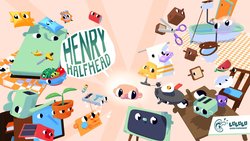
Every year we see many sequels, spiritual successors, and familiar mechanics dressed in a fresh coat of paint, so when a game comes along with a genuinely unique central concept, it immediately earns attention. Henry Halfhead is one of those games, a short but charming, innovative puzzler that is sure to be quite unlike anything you’ve ever played.
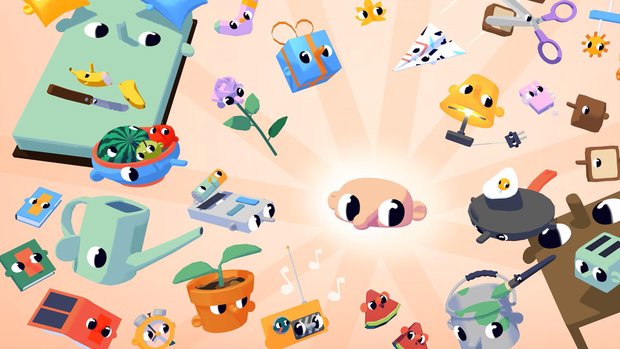
This game follows the unusual life of Henry, a (gender-neutral) child born as little more than a floating half-head who experiences the world by possessing the everyday objects them. It's a premise that sounds completely absurd, but it proves surprisingly effective in practice. Rather than focusing on difficult puzzles or traditional adventure game logic, the game encourages experimentation and rewards curiosity. If you see an object in Henry Halfhead, there’s a very good chance you can do something with it.
The interface is refreshingly straightforward and rarely draws attention to itself, which is exactly what a game like this requires. On the PlayStation 5, which I played on, moving Henry is controlled in the standard 3D way of left stick to move, right to pan the camera, whether as the protagonist’s default head or in the form of any possessed object. When playing as Henry, you can also jump by pressing the X button, which gives you height and the ability to position yourself directly on top of objects.
Possession is simply a matter of pressing the circle button when you’re next to an object, or holding it down to return to Henry’s normal form. You can possess most things; it’s truly rare to find one that you can’t, and the developers claim there are over 200 objects to interact with. When you’re in the form of whatever object you’ve possessed, the X button becomes an action key, so a vacuum cleaner will suck or a pencil will allow you to draw on walls or whatever is close by. The ease of changing shapes encourages constant experimentation, allowing you to jump effortlessly from one object to another without cumbersome menus or unnecessary complexity interrupting the flow.
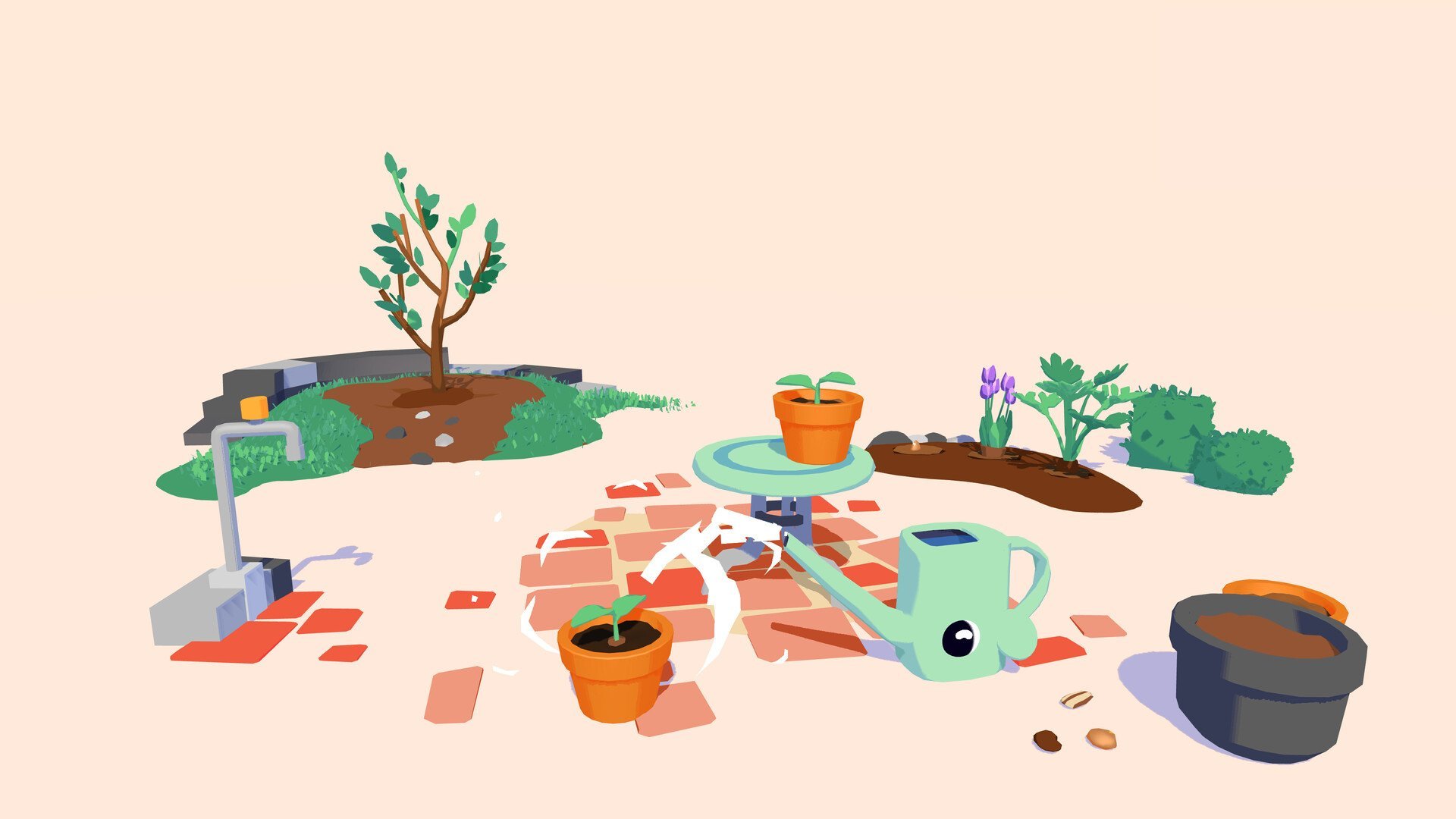
Objectives are communicated clearly by a narrator, although they generally serve as suggestions rather than strict instructions, like noting Henry’s apartment is untidy, or that you need to pack your bag for the day ahead. Many tasks can be approached in different ways, but most of the challenges revolve around understanding what each object can do and then applying those abilities creatively. Scissors cut, so it makes sense that they will be used to slice ribbon or paper when needed. A watering can clearly waters plants. A battery powers electronics. If you need to leave a room unnoticed, you might have to disable any alarms before unlocking the door. Individually these interactions are wonderfully intuitive, and gradually completing the correct series of events creates a satisfying sense of discovery that doesn’t rely on obscure logic.
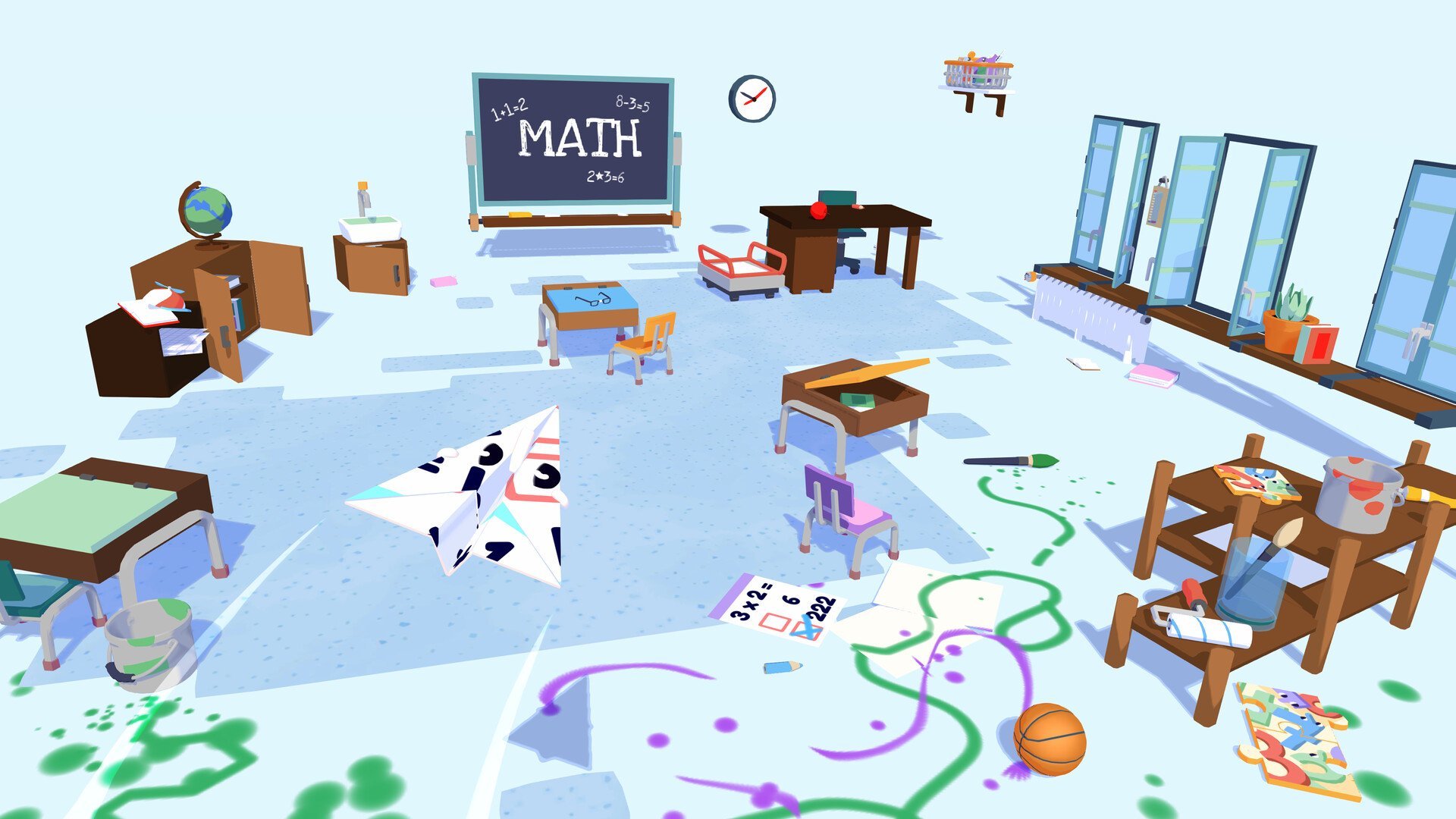
The greatest pleasure, though, comes from attempting things that aren’t at all required. It's entirely possible to become distracted for many minutes at a time, simply trying to discover what unexpected interactions the developers have included. Planting seeds, painting walls, flying around as a paper plane, and testing the other abilities of every object in a room often becomes more entertaining than completing the actual objective. My favourite was trying to put random objects down a delivery chute to see what would happen.
As fun as it is to experiment, this positive can also be a negative in that the central mechanic doesn't evolve enough over the game’s fairly short run time of three hours. New objects continue appearing, but relatively few of them fundamentally change the way puzzles are approached. By the later chapters there is a noticeable sense of familiarity, with certain interactions beginning to repeat themselves.
But while Henry Halfhead might appear to be little more than a quirky physics sandbox for solving light environmental puzzles at first glance, there is more going on beneath the surface. Henry’s story unfolds over five recognizable chapters (although they’re not labelled within the game), each representing a different stage of the body-less protagonist’s life, beginning with childhood and continuing through school, adulthood, middle age and finally old age. (In a nice touch, Henry’s half a head visually ages as you progress.) Rather than relying on lengthy cutscenes or extensive dialogue, much of the storytelling is woven naturally into the environment and the activities you need to complete. The objectives themselves often mirror Henry's changing priorities in growing older, creating a surprisingly effective narrative without feeling heavy-handed or saying too much.
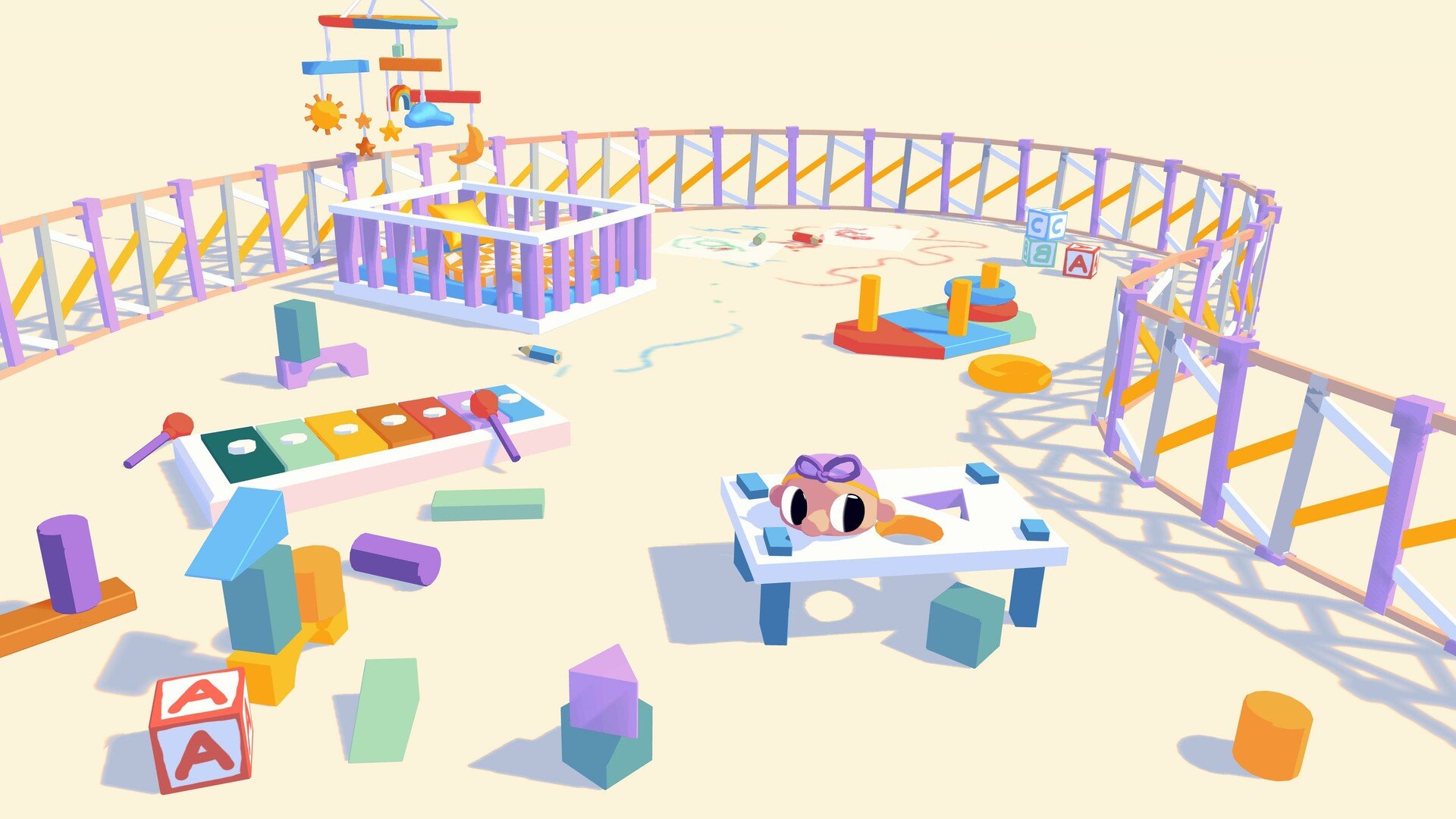
The early chapters are wonderfully playful. Every room feels like a giant toy box waiting to be explored, and the simple tasks you're given rarely matter as much as what fun things can be discovered along the way. Building towers, drawing pictures, setting up for a birthday party, or simply seeing what unusual abilities each object possesses all contribute to the feeling that childhood is limitless.
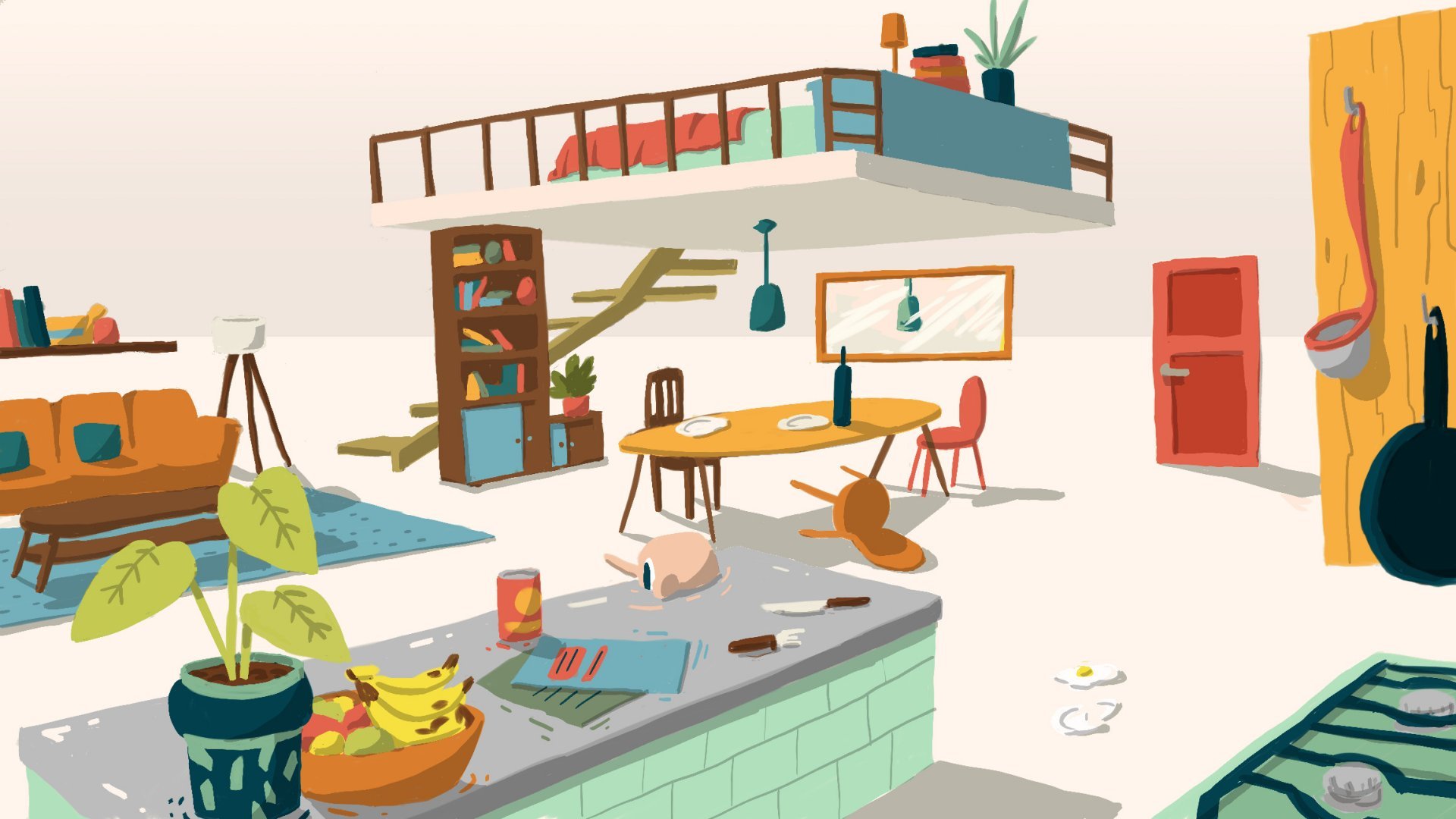
As Henry matures, the tone changes from the freedom and whimsy of childhood to a life that becomes more structured during school. By the third chapter, as an adult, we’re introduced to work and that all-too-familiar feeling of being busy but unsatisfied. This is beautifully illustrated by Henry working in a factory sorting boxes into one of two containers, depending on the shape, followed by knocking off work to go home to a sparse apartment and cooking a microwave dinner. One scene that really captures the notion of monotonous work life is when the bus is cancelled, forcing Henry to walk home. The narrator reminds you to look on the bright side of life – it’s not raining at least. Then it starts raining.
The factory chapter in particular really reflects both the game’s strengths and weaknesses. Narratively, its repetitive structure reinforces Henry's growing dissatisfaction with adult life, but from a gameplay perspective, it undeniably slows the momentum. Eventually, however, it becomes obvious that this repetition was intentional. Henry has lost all sense of play, and as the player you are expected to feel that same monotony. Knowing this doesn't necessarily make the repetition consistently enjoyable, however.
Henry Halfhead
| Genre: | Fantasy |
|---|---|
| Presentation: | Realtime 3D |
| Perspective: | Third-Person |
| Gameplay: | Co-op, Environmental puzzler, Cozy |
| Control: | Direct Control |
| Theme: | Experimental |
| Graphic Style: | Cartoon |
The final chapters reverse this trend, gradually encouraging experimentation once again as Henry rediscovers the joy that had slowly disappeared from everyday life. This is demonstrated by playing on a swing or looking around the room at items from the past. It's an understated character arc, but one that works because it never feels forced. Growing older doesn't necessarily mean losing curiosity.
Dialogue is kept to a minimum throughout much of the game, with the cheerful narrator carrying the storytelling responsibilities. His voice work is really quite exceptional, with a slight British feel that brings to mind early childhood cartoon narrators. The writing also has a playful quality that suits the game's tone perfectly. There are plenty of amusing observations scattered throughout the adventure, like a childhood drawing on a newspaper eliciting a comment that Henry’s parents would surely appreciate this piece of art. The humour rarely relies on laugh-out-loud jokes, instead succeeding through charm, gentle absurdity and the sheer joy of discovering what happens when you possess yet another unexpected household object.
One of the game's smartest design decisions is avoiding excessive hand-holding. While the next goal is usually obvious enough to prevent frustration, the game rarely tells you exactly how to achieve it. That leaves plenty of room for trial and error, which is ultimately where the greatest enjoyment comes from, although there are occasional frustrations. Certain objects can be awkward to position the pieces together precisely, such as the jigsaw puzzle in the childhood chapter, and sometimes it can be difficult making the camera line up.
These moments are relatively infrequent, but noticeable enough that they occasionally interrupt the otherwise smooth pacing. Fortunately, they never become significant obstacles. For the vast majority of the journey, the interface succeeds in remaining almost invisible, allowing the focus to remain exactly where it belongs: on playing with the wonderfully interactive world.
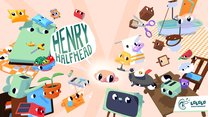
The presentation is technically quite modest, but the game's artistic direction consistently serves both the gameplay and the story, proving once again that a strong visual identity is often far more memorable than raw graphical power. Henry Halfhead adopts a suitably colourful, toy-like aesthetic that perfectly complements its playful premise. Rather than chasing realism, the game embraces simplicity, creating environments that immediately feel welcoming while still containing enough detail to reward exploration. Every room is packed with interactive objects, yet the visuals remain remarkably clean and readable.
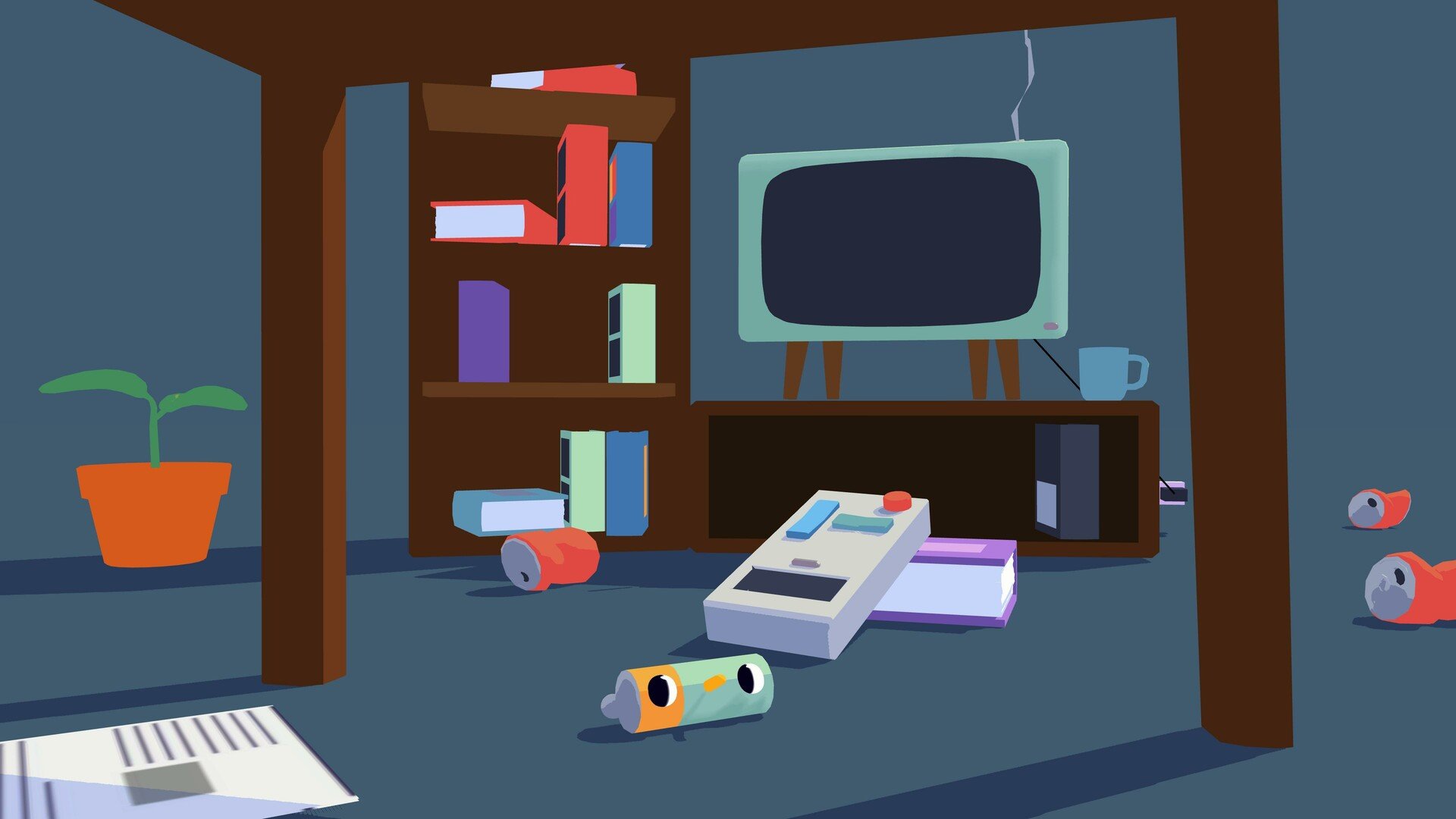
The rooms are simply plain light backgrounds filled with objects to interact with. The nursery in the first chapter, for example, has no walls, but the door is visible, as are the objects you can possess. Each chapter introduces new environments that subtly reflect Henry's changing stage of life. The childhood home bursts with colour and possibility, while the office feels deliberately more sterile and repetitive. Later locations gradually regain their warmth as Henry reconnects with the sense of wonder previously lost. It’s visual storytelling at its most understated, but this minimalistic approach, combined with the multitude of objects you’re able to interact with, works remarkably well.
Object animations deserve particular praise. Every item you can possess has its own unique movement and personality, often resulting in surprisingly amusing situations as ordinary household objects bounce, wobble or shuffle their way around the environment. These animations do a tremendous amount of work in selling the game's whimsical premise.
The audio, too, quietly reinforces everything the game is trying to achieve. There may not be many memorable musical themes, but the soundtrack remains gentle throughout most of the adventure, providing enough atmosphere to support each scene without ever becoming intrusive. During Henry’s childhood, the music feels playful and optimistic, while later chapters adopt a more restrained tone before eventually returning to something warmer and more hopeful by the conclusion.
Sound effects contribute enormously to the game's personality. Every object seems to have its own distinctive aural identity, making even simple interactions satisfying. Inserting batteries into a radio rewards you with a realistic electronic click followed immediately by the sound of audio hum, while moving a crayon across a surface produces an authentic, textured, waxy scratching noise against the floor.
The narration also deserves recognition. Rather than overwhelming you with constant commentary, it instead strikes a pleasant balance between guidance, humour and storytelling. The actor’s delivery consistently matches the game's relaxed atmosphere, helping maintain the sense that you're being encouraged to experiment rather than instructed to complete goals as efficiently as possible.
The story of Henry Halfhead concludes in a satisfying way, leaving you feeling like you’ve experienced Henry’s life from childhood to old age in a fun and creative way. However, it is disappointing that the possession mechanic doesn’t ever evolve from what is established in the beginning. If it had, there would have been plenty of room to expand the adventure further. Instead, the game feels like it ends a little too soon.
Final Verdict
Henry Halfhead is one of those games that's difficult not to admire. Its possession mechanic is genuinely original and rewarding, its presentation is consistently charming, and its gentle story about growing up and rediscovering the joy of life is heart-warming. It occasionally brushes against repetition, but it’s short enough to not wear out its welcome, and the overall experience remains engaging from beginning to end for players of all ages to enjoy.
Hot take
Henry Halfhead is a wonderfully original puzzle adventure whose inventive possession mechanic, charming story, and rewarding experimentation easily outweigh its occasional limitations.
Pros
- Fun gameplay mechanic encourages experimentation
- Almost every object can be possessed, providing great variety
- Hand-drawn artwork is vivid and bold
- Well-voiced narrator is the perfect accompaniment in an otherwise wordless story
Cons
- Some gameplay repetition eventually becomes frustrating
- Camera doesn’t always allow for precise object manipulation
Shawn played his own copy of Henry Halfhead on PlayStation 5.
- Advertisement
- Help support AGH by advertising with us






0 Comments
Want to join the discussion? Leave a comment as guest, sign in or register in our forums.
Leave a comment