
BrokenLore: Don't Watch review
- 0 Comments
Second standalone horror installment can’t match its thoughtful vision with a worthwhile gaming experience
BrokenLore: Don't Watch has an intriguing title. It sets itself up, of course, as being another instalment in the BrokenLore saga (the second of three so far, following 2025’s BrokenLore: Low), suggesting that there's narrative depth beneath it. The subtitle appears equally meaningful as both direct and enigmatic, like the short, sharp title of a great horror flick. It perhaps even evokes "Don't blink," the line linked to the Weeping Angels, those terrifying Doctor Who villains who represent the apex of low-fi fear. This game is indeed something familiar in one sense, bringing its predecessor’s mixture of topical issues and strikingly presented yokai. It is fairly original for a horror game, though, in its focus on someone trapped in their flat. So many different elements of the game's foundations make it appealing – and yet reality presents too many annoyances and missed opportunities to not be left disappointed.
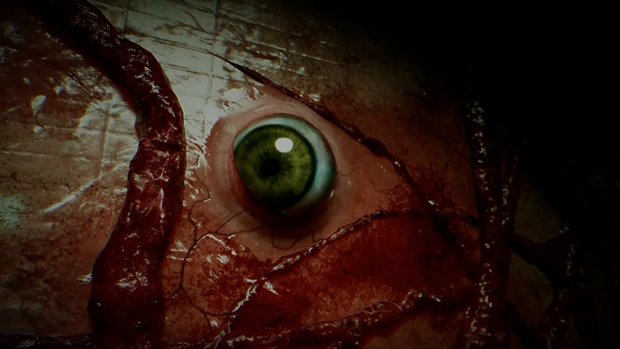
Just like the previous game, this adventure is presented in a first-person perspective, here putting players in the shoes of the initially unlikable Shinji. He is what’s known in Japan as a hikikomori – meaning a recluse, typically young – who lives a sheltered life in his apartment. His social avoidance is reflected in his curt, unjust responses to friends and family over the phone and computer, and the stacks of rubbish bags in his manga-filled apartment. He gets a rude awakening from his stasis, however, when he learns that a friend has been killed by having his head wrenched from his shoulders. The same fate seems destined to reach Shinji next, as creepy figures start to intrude upon his flat, not least a series of threatening eyes that appear throughout his supposedly private domain.
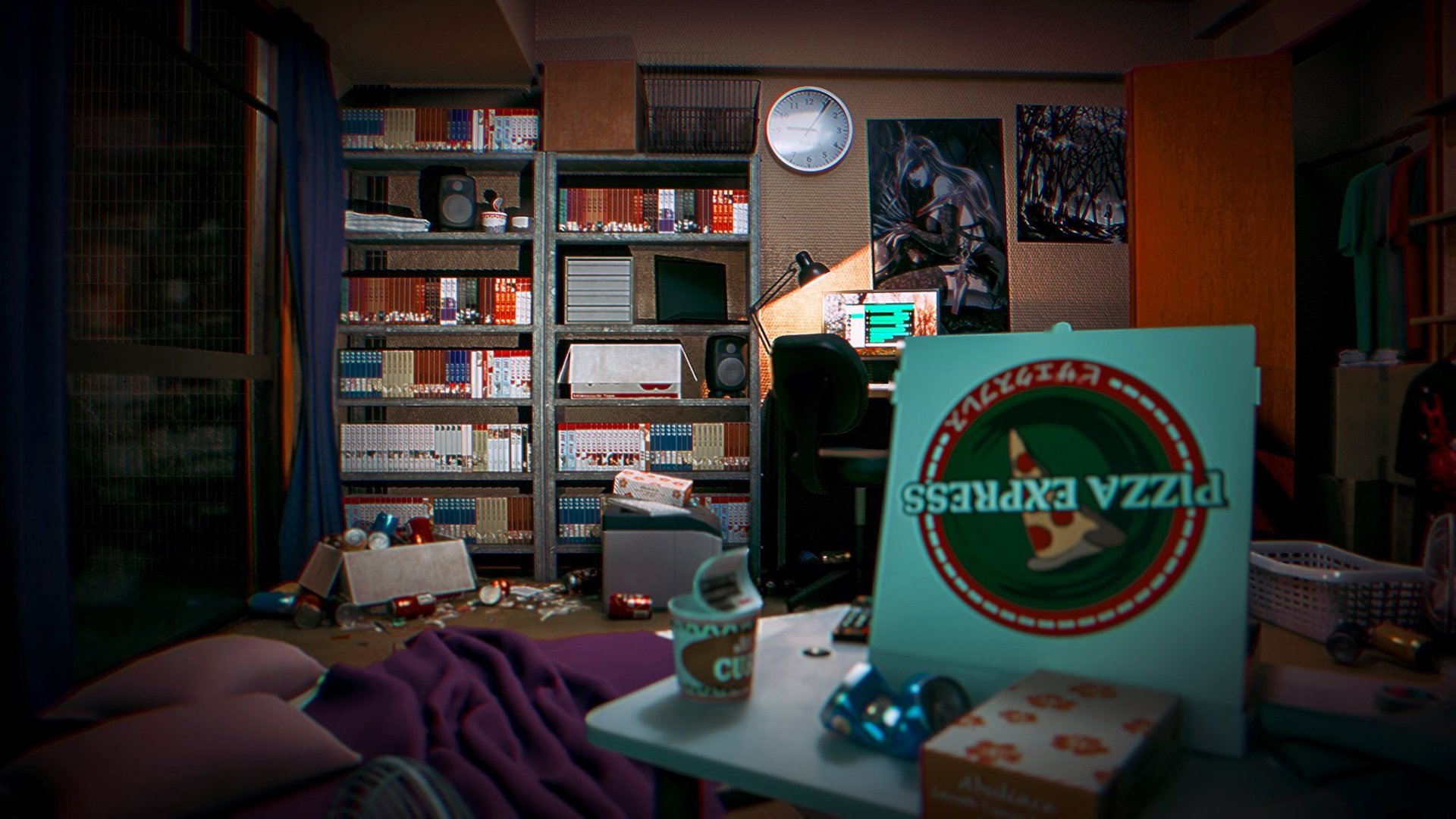
As the player, there initially seems little to do beyond letting yourself be hand-held through the narrative. The first twenty minutes have you stuck in your apartment with mundane activities to perform in assigned order: logging onto your computer, looking through your front door's peephole, turning on the TV, etc. Tension does start to interrupt routine as the friend's death and menacing visitors send music roaring to life in your ears; warped, creaking music that seems to speak of reality coming apart. This escalation, unfortunately, leads to more frustration when you can't react appropriately. A large knife lying on the counter seems an obvious go-to even before the game forces you to find it. And Shinji's decision to take a calming bath seems fully at odds with the heightened stress that you feel. Given that many thrilling games are set in one location, such an uninvolving start instantly sets off alarms.
Sticking with the story does reveal a few attempts at variety, pushing Don’t Watch's focus on a single location to its limits. There are a couple different sequences set in the corridors outside the apartment; there's even an extensive one apparently set within the depths of Shinji's psyche. These segments all have unique, simple-to-grasp mechanics, and are mostly succinct. The knife becomes a tool to rid your apartment of supernatural eyeballs. A quasi-stealth sequence involves covering Shinji's eyes from the unstoppable yokai when it appears, somehow preventing you from being killed. Another episode has you doing the opposite, sprinting at the same enemies as a means to defeat them. These shorter sequences lack complexity (your time with the knife essentially being an Unreal Engine-powered spot-the-difference minigame) but they do manage to make the game feel alive.
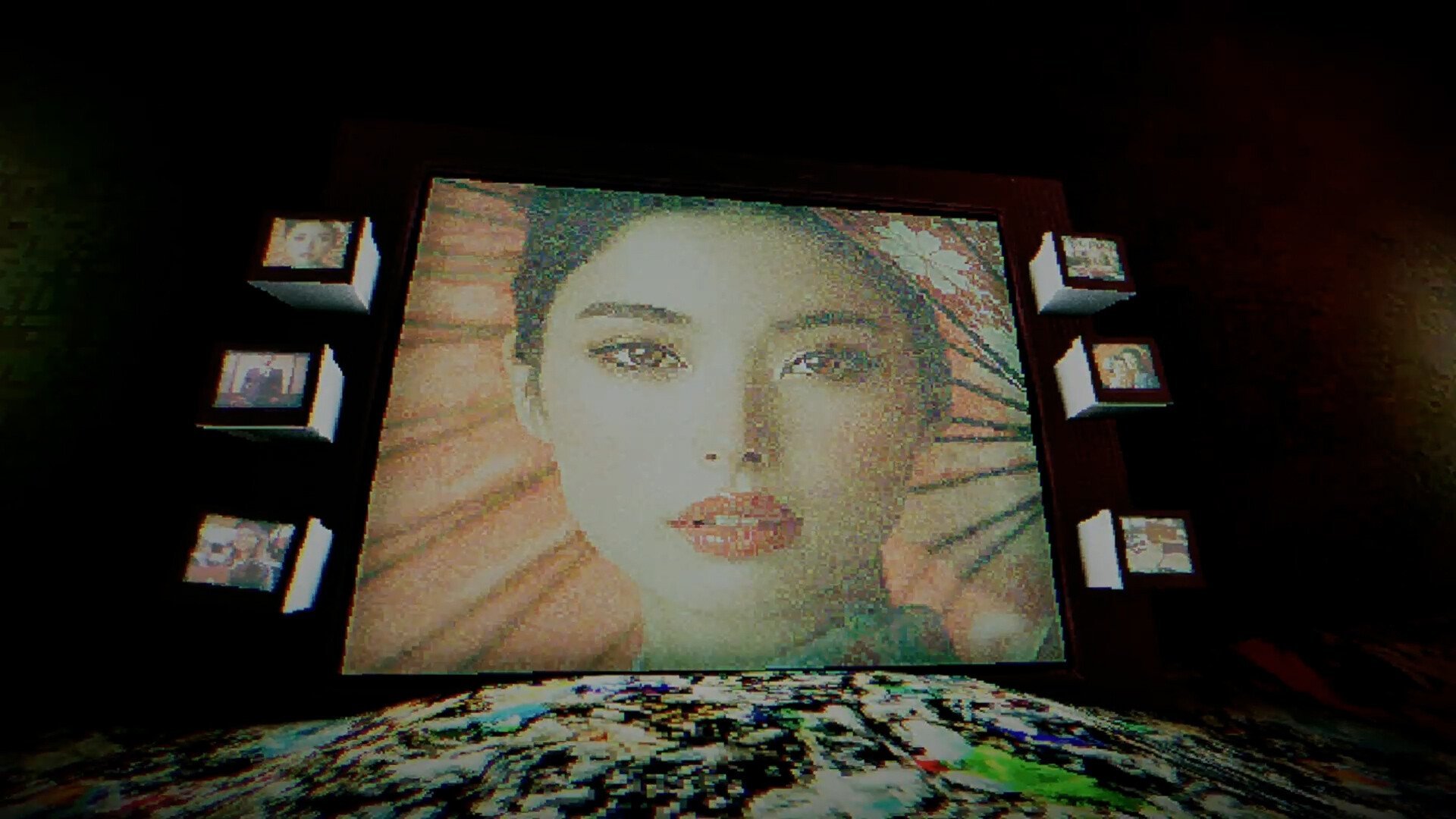
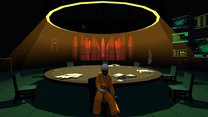
The longest sequence is a retro one, yanking players from the realistic 3D apartment environment and thrusting them into a dreamlike, low-poly world with an enormous TV displaying images that seem to typify a "good life." Depictions of things like wealth, family, and academic success flash on the screen repeatedly, and it's an effective way of conveying the looming, stultifying pressure that Shinji is under. The way to combat these images is simply to run around unhooking the six scattered TVs broadcasting the images to the central screen, a scenario which seemed to have some promise. I chose to go in a direction with a maze-like house at its centre and a faceless, unceasingly pursing creature within. My only concern was that the terror and difficulty might be too high. Instead the opposite was true in the long run, as the creature was so easy to avoid for the other five TVs that the process felt overlong and tedious. Don’t Watch initially teases intelligent insight that the world creates hikikomori through unreasonable, potentially unenviable pressures, but its power is undermined by how thinly it's spread.
Frustration is largely absent from the experience, at least. Different gameplay mechanics are elegantly introduced, often through multiple means: pop-up text, Shinji's inner monologue, and environmental cues. The keyboard controls remain consistent, too, with a button for run and another for whatever other current mechanic is at play. The TV sequence is designed to unsettle, since you're told nothing about how to escape it; large cables branch out from the centre that you must implicitly follow. These sequences – apart from the lengthier fifteen-minute retro detour – take little more than one or two minutes. Unless you die, anyway. I found myself dying a few times, whether getting cornered in the house or not realising a yokai was behind me, but the simple controls and goals prevented replaying sections from becoming tiresome, and it never took me too many attempts. The game thankfully also doesn't punish you by removing progress in the TV section; a well-considered approach given the tedious length of it.
BrokenLore: DON'T WATCH

| Genre: | Horror |
|---|---|
| Presentation: | Realtime 3D |
| Theme: | Cultural, Monsters, Psychological |
| Perspective: | First-Person |
| Gameplay: | Survival, Exploration |
| Control: | Direct Control |
| Game Length: | Short (1-5 hours) |
| Difficulty: | Low |
| Graphic Style: | Simulated realism |
For the most part, then, this is all pleasant enough to play. The problem is that the simplicity pairs poorly with the lack of wider interactivity and puzzles, resulting in a scare-weakening, immersion-crushing sense of passivity. The premise here is of a very contained tale, though the game's only puzzle – clicking a few objects in a wall-scrawled sequence – reveals an Easter Egg hinting that, without too much in the way of spoilers, the grim experiences of the BrokenLore protagonists may be interlinked. It's all vague and doesn't add much to the tale, though, so the solid ideas here don't leave you much more than feeling a little curious as to what the developers' intentions are for this franchise.
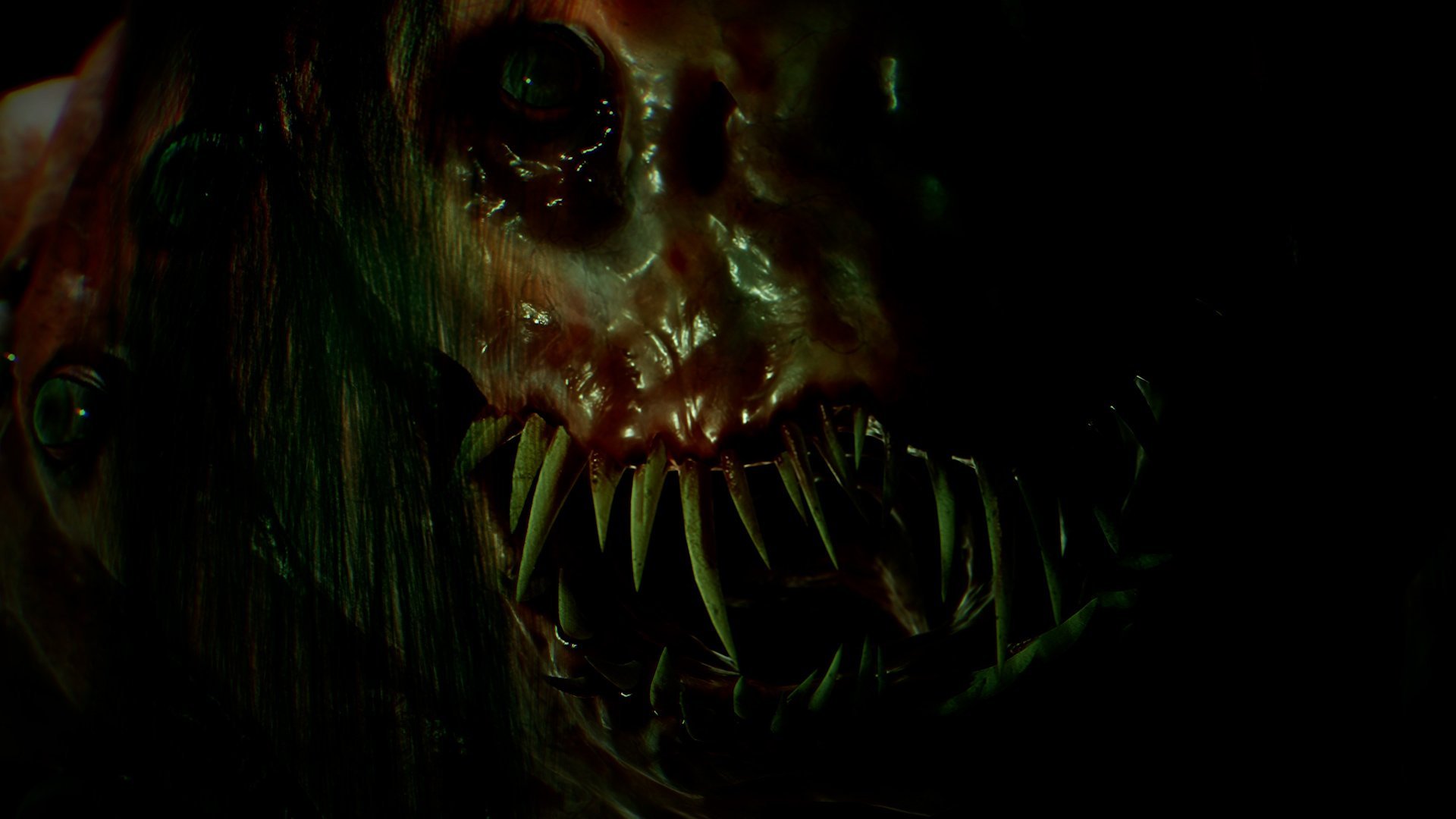
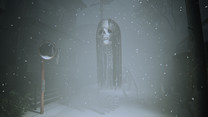
Inconsistency runs through most elements of Don’t Watch, such as its superficially impressive monster design. The creature that chases you through the retro section is the most altogether well-conceived, with alarming sound design: deeply ominous with creepy pained muttering, and then terrifying as the creature sees you and devolves into an aggressive, strained roar. Its masked face, looking both empty and haunted, and the contorted body – laden with what seem to be straw sacks – live up to the early impression of terror. It appears altogether to be something primal and monstrous. Unfortunately, the primary yokai, the Hyakume, only has its fearsome visage to offer. Its original folkloric presentation is that of a passive, eye-covered blob, but this game adds more menace and razor-sharp teeth. These teeth, however, aren't the gateway to threatening or alien sounds, as the eye-covering sequence reveals it to emit squelchy sounds in a way that's reminiscent of thumb-sucking. It's frequently disappointing to experience the game getting close to greatness yet obviously failing to achieve distinction.
There are some even more basic issues that make the presentation underwhelming. Characters feel like marionettes in their unnatural movements, something that is obvious the first time you see Shinji appear to glide towards his mirror. It was off-putting enough to leave me wondering whether it might be intentional and that the twist would actually be that he's a ghost. A later moment meant to be particularly creepy – a character shaking inhumanly whilst wearing a rictus grin – just looks like the character is being shaken about on strings. It goes against the attempt at photorealism in re-creating the grime of a hikikomori's home. It's also a distraction from true immersion in the game world and its thoughtful thesis.
If the aesthetic and gameplay elements wrongly evoke carelessness, intelligence does underpin the production. The implications of the Hyakume are perhaps even more potent than the game’s metaphors of societal pressure. The supposed safe retreat from the world cannot help but be invaded, at first shown literally through a debt collector and Shinji's parents slashing his allowance. The Hyakume's eyes, however – and, moreover, its message – bring this reality into greater focus: no matter how you try to avoid the world, it'll come for you. The game becomes less about the survival of a shut-in, and more about the decision of how you'll engage with the unavoidable, oft-threatening existence of society. That's just one interpretation (you could also argue the yokai represent the destructiveness of hermitage), which is emblematic of both this game's worth and underlying passion.
But in this constant push and pull between commendable ideas and unimpressive execution, the ending itself serves as a final reminder of a vision that isn't well-rounded. Shinji has experienced pure, life-changing terror, and then...that's it. The story is interested in why people become hikikomori and what might drive them to look differently at their lives, but its interest unfortunately doesn't extend to the possible afters of what might happen from trying to reach out to the world again. It’s disappointing when the narrative feels like it could be set up to explore the seeds of reintegration against a messy, hard-to-control result. The lack of consequence puts into question the quality of any insights provided earlier in the game, leaving a doubt that they are anything more than superficial points rather than part of a well-considered argument.
Final Verdict
Despite my doubts and frustrations, I'm glad to have played the game. Its themes did resonate with me at times, and they feel particularly relevant in an age of increasing isolation. The problem that most players will likely find, though, is that BrokenLore: Don't Watch doesn't satisfy very much as a video game. Its aesthetics and pacing particularly drag the experience down, distracting from the ideas at play and perhaps even preventing those ideas from being fully fleshed out. All of these errors are egregious given that the game is over after an hour and a half; another largely standalone and unsatisfying very short story – more like flash fiction – in the loose BrokenLore universe. It's unfortunately hard to recommend a game that, no matter how well-intentioned and occasionally startling, ultimately still feels like a proof of concept.
Hot take
The second short standalone game in the BrokenLore series, Don't Watch has some merit with its dive into the fears and threats facing a young social recluse, and there's promise in its varied gameplay mechanics. It’s a shame, then, that it’s too inconsistent in almost every way for a truly impactful, worthwhile experience.
Pros
- Distinctive enemy designs
- Sensitive understanding of a hikikomori
- Varied gameplay mechanics keep the experience feeling fresh
Cons
- Visually unconvincing human characters
- Retro sequence is far too extensive
- Frustrating level of handholding
- Some scares fall flat
Ceridwen played BrokenLore: Don't Watch using a review code provided by the game's publishers.

0 Comments
Want to join the discussion? Leave a comment as guest, sign in or register in our forums.
Leave a comment