Tim Schafer and the new indie future of Double Fine
- 0 Comments

It’s a bit hard to believe it has been nearly fifteen years since the Kickstarter for Double Fine Adventure launched in February of 2012. I remember the game being talked about by people in my friend circle who had never even heard of the likes of Purple Tentacle or Manny Calavera. It was an incredibly special time when Double Fine Productions proved that crowdfunding can be a viable option for getting independent games off the ground, which laid the foundation for many other future game projects utilizing similar strategies for development.
That event, which would go on to result in the release of Broken Age, was a big reason why many were blindsided by the announcement in 2019 that Double Fine was being brought into the fold of Microsoft’s Xbox Game Studios. After being a trailblazing icon for smaller studios for nearly a decade, it was strange to think that the company would continue under the same umbrella that included the likes of Halo and Gears of War. The strangeness dissipated once we were able to get our hands on Psychonauts 2 and later Keeper, reassuring fans that the creative spark that is quintessentially Double Fine was still very much alive and well. At least, that’s what it looked like from the outside – for a time.
Earlier this year, a massive shake-up at Xbox Game Studios began sweeping through the company. With rumors in June speculating that employees were soon going to be laid off, many feared the worst for the various studios the publisher had acquired. A now famous post on Double Fine’s Bluesky from June 15th was a simple sweat drop emoji, with thousands of likes, reposts, and kind words of support in response. Then on July 6th, the news hit that 3,200 employees would be let go from Xbox Game Studios, and four studios – including Double Fine – would be leaving Microsoft and regaining their independent status.
This actually seemed like a potential win for Double Fine. They retained ownership of all games they had developed both before and during the Xbox acquisition, and they were now free to chart their own course just like they had done in years past. But this newfound freedom came at a great cost, which we learned a month later with the announcement of 23 staff members being let go from Double Fine to ensure the company was scaled back to a size it could sustain. It was a solemn reminder that being independent is incredibly difficult, with tough choices that sometimes have to be made for a studio’s survival.
But things were not all doom and gloom. In late August, Double Fine’s iconic two-headed baby mascot was reborn as a baby phoenix on social media, symbolizing the studio’s rebirth after emerging from such a brutal ordeal. With a new mascot illustration came the announcement of two more exciting pieces of news: the company would be returning to Kickstarter with a brand new campaign for an Amnesia Fortnight game jam, and they would be attending PAX West for the first time since 2019. As a Seattle area local, I had to see for myself what was in store for the future of one of gaming’s most iconic developers.
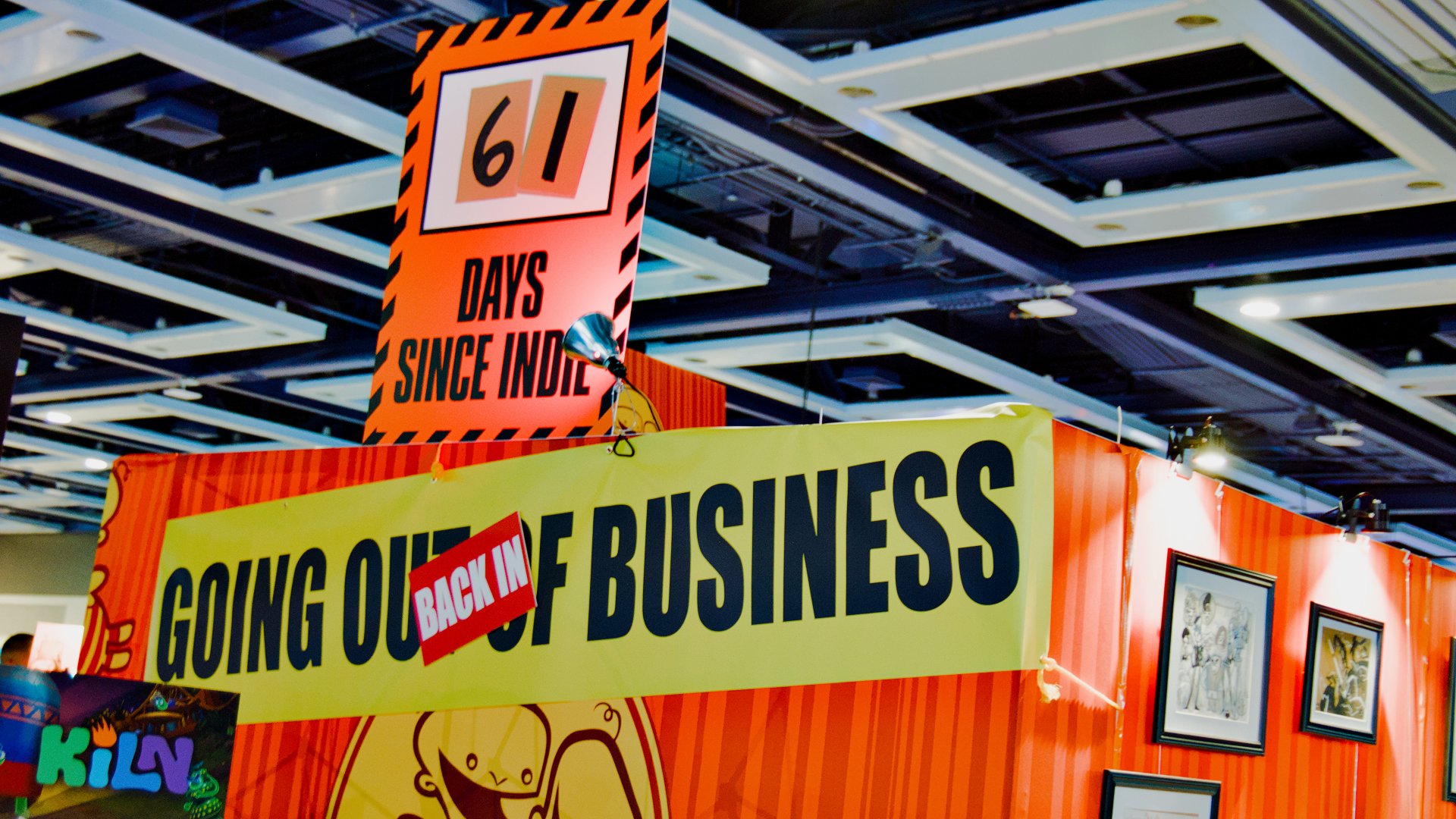
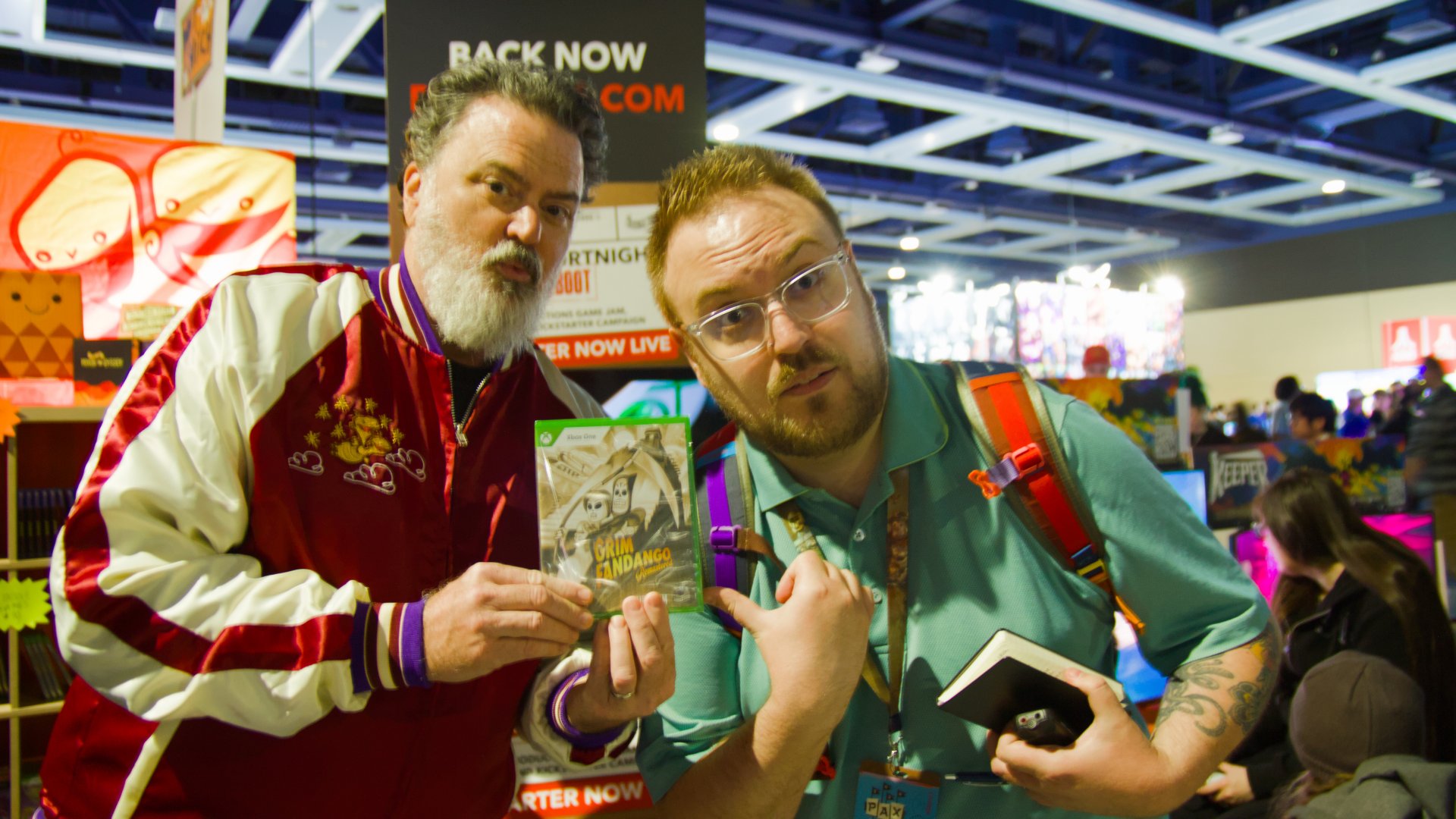
And so, this past Labor Day weekend I found myself wandering the halls of the convention center in Seattle, and nestled back in the furthest reaches I discovered a booth adorned with a familiar mutant baby. There they were hosting playable demos for a variety of projects, including one for the recently shadow-dropped PlayStation 5 port of a certain highly acclaimed lighthouse-based adventure. After testing out the latest in black-and-white cartoon bus driving technology, I was granted an audience with the famed bearded entity known as Tim Schafer, studio head of Double Fine and a man who needs no introduction to his legendary career. Once I got over the initial butterflies of meeting someone who has designed some of my favorite games, I took this opportunity to ask about Amnesia Fortnight 2026, Indie Reboot, the shift away from green X-branded platforms, and the future of Double Fine moving forward, among many other things.
(The following quotes have been edited for clarity.)
Going indie again as a studio after seven years is no easy task, even for one like Double Fine that’s been around for over a quarter century. When I asked how he and the team had been holding up amidst the whirlwind of turmoil in 2026, Tim admitted that it had “been a lot of stress and a lot of work, and the team could really use some time off.” And yet it’s a time for excitement as well, as he said they’re all “very excited about being independent again and being able to do whatever we want to do and to be just reliant on our own creativity to save the day.”
This clearly wasn’t the plan back in 2019, however, when it seemed like joining forces with a major company like Xbox Game Studios would offer Double Fine the security and resources to break free of the innate restrictions of going it alone. But Tim expressed no regrets about the path taken by Double Fine, saying: “It was a great experience working with Microsoft. They invested a lot in the company and our mission was shared [to] put a bunch of high-quality, diverse, interesting stuff into Game Pass.”
Game Pass seemed like a good fit for Double Fine at the time, Tim thought, because “people are more willing to experiment and try things, which our games are always like a little weird and take some time to understand what’s going on sometimes.” Unfortunately, according to the Wall Street Journal, Microsoft had anticipated a Game Pass subscription base of 77 million subscribers by 2026, and the latest numbers were closer to 30 million. As a result, Xbox has been moving away from a focus on Game Pass and zeroing in on their core IP.
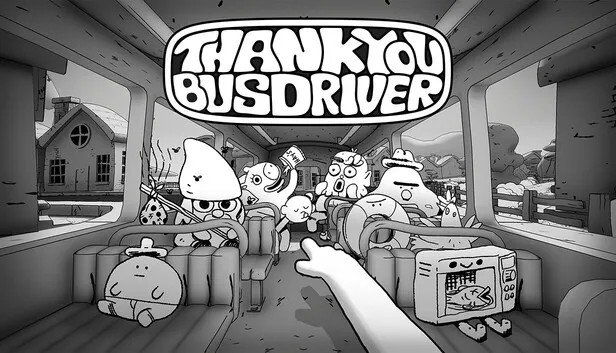
For Double Fine, that change in mission was an opportunity rather than an obstacle, with Tim asserting that the studio “luckily escaped and went our different way.” It was a daunting challenge, but it allowed them to get “back to what we wanted to do, which is to get scared and not know where your money is coming from, and to take our ideas on the road which is what we’ve done for twenty years. And we can do whatever we want, we can set our own prices, and we can sell games like Thank You Bus Driver that are a weird size for Xbox to release.”
With that newfound freedom, Double Fine is bringing back one of their longstanding studio traditions: Amnesia Fortnight. This was once a top secret process, where different parts of the studio split off into designing a playable prototype for a game outside of whatever big projects were currently in development. Starting in 2012, however, these game jams were made viewable by the public and incorporated community feedback into which games were developed further and led to some full retail releases. Tim describes the process as two “intense” weeks with “no time to worry about anything. You just make a decision that day, it goes in, you move on to the next thing, get it done. You can really only do one feature, one mode or whatever.” Like a hands-on form of brainstorming, Tim calls it a “creative exercise about turning off that inner critic in your head that slows you down.”
It has been a long time since the last true game jam at Double Fine, the most recent Amnesia Fortnight occurring in 2019. So to make the new one more special than ever before, the fans were brought back into the process. With its Kickstarter announcement, Amnesia Fortnight 2026, Indie Reboot launched a new indie era for the studio. Not a major project akin to Psychonauts, but a smaller game that would get the creative juices flowing.
Not that the team is opposed to bigger undertakings down the line. Indeed, Tim says they already have “multiple game ideas that we are talking to publishers and funding sources about.” But those require a “runway … we can take off” from, and “the longer the runway the better.” That means smaller projects like their Kickstarter, which is “a way of extending that runway just a little bit.”
While the strategy may be financially necessary, it’s also a liberating return to the indie scene for the entire team as artists. Tim says it represents a "big break and the celebration of being independent again. Because this is something we can do now – we can have a bunch of goofy ideas, we don’t have to run it by anybody, we can just put it out directly to the backers and go like, 'which one do we make?'"
And we get to watch it all happen. With the new Amnesia Fortnight, Double Fine is bringing back Two Player Productions to pull back the curtain and film a documentary about the whole process, like they have done on various projects since the Double Fine Adventure Kickstarter. As to why, for Tim the answer is twofold. One is that Two Player Productions are artists themselves, making documentaries that are a “piece of art” in their own right.
But Tim is also eager to “open up the curtain on game development” to show viewers that anyone can be a game developer, even those who insist that “I don’t have any skills” or “I can’t program and I can’t draw, so I can’t work in games.” Tim believes that by showing the diversity of roles involved, it just might inspire people to take an interest in “all the different jobs that there are in games,” from producers to sound editors, testers, release managers and more, all of them “critical” to making games. Without such exposure, people won’t even know they exist, but “if they see them, they can visualize themselves having a creative life and working in games.”
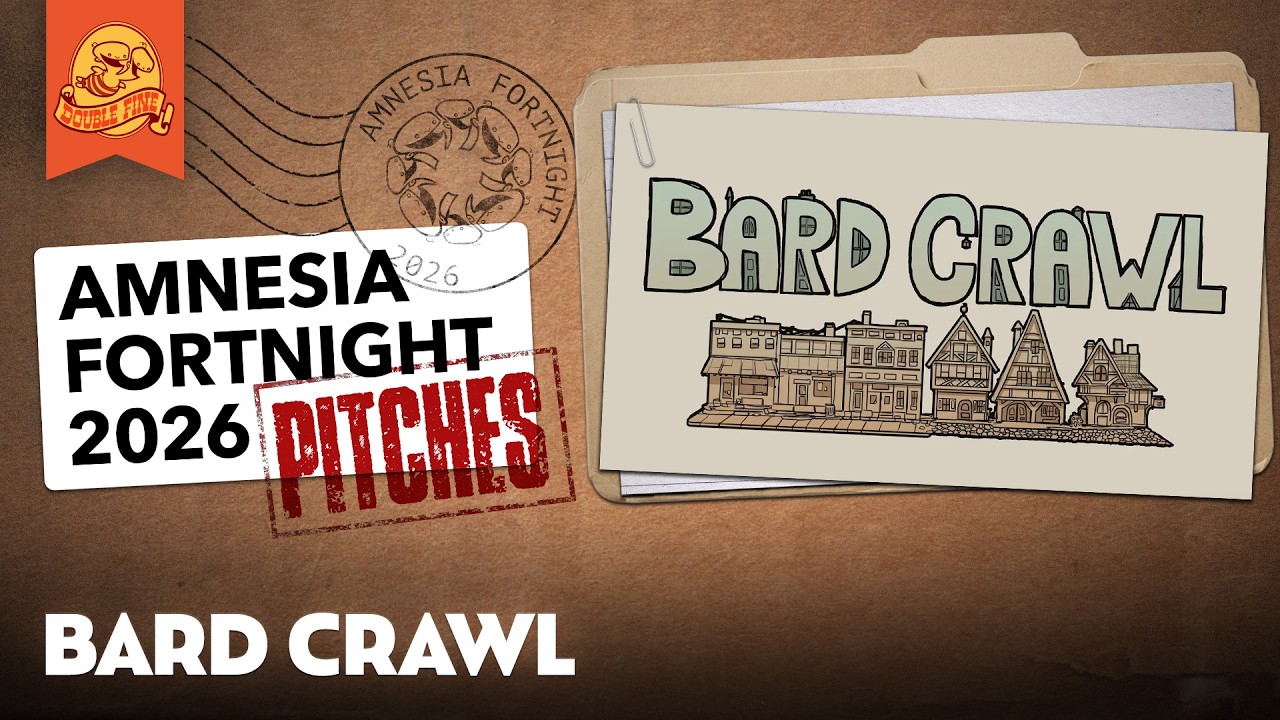
With any new game announcement from Double Fine, there’s always the promise of an intriguing concept. But with this new game jam, the Amnesia Fortnight 2026 Kickstarter specifically states that the winner of the will be a “short” game. Of course, the Double Fine Adventure was supposed to be “short” too, before the overwhelming outpouring of support allowed for a bigger project to emerge. Tim didn’t rule out a potentially longer game, since “some of the ones that are multiplayer are infinitely playable, and some of the ones are a different size,” but that the strict time limit ensures that there will be no feature creep, as they are “going to spend roughly six weeks on the project in total.”
Seeing a new Kickstarter by Double Fine feels weirdly nostalgic. The studio may not have been the first to crowdfund a game, but they definitely popularized the strategy. Could this be the model for all future projects to follow? Tim certainly believes that it’s “something that we could do again.” In fact, he claims there’s a part of him that “always wished Kickstarter was going to get bigger and bigger and then eventually all of our games could just be Kickstarted.” But Kickstarter too has its limitations, and Tim took note that “the biggest ones in games were like five million and then they started getting smaller again.” (Though he readily agreed Double Fine could “definitely make a game for five million dollars.”)
While Double Fine Adventure was, of course, an adventure game, none of the Amnesia Fortnight game pitches are point-and-clicks. I asked Tim why, and whether there is still an appetite from the team to make traditional adventure games, or if that is something that they feel they’ve already done at this point and are wanting to try new genres.
I think they like trying something new; a lot of the genres are new, the multiplayer thing is kind of new for us. One of the reasons I haven’t made an adventure game is you should just do the opposite of what I have done last. I think we try to put a little bit of adventure games in everything that we do. Try to put the puzzles, and some nonlinear problem solving and also just a lot of characters and story. I think the adventure game spirit comes from LucasArts, and then Double Fine’s thing is just to be much more experimental and try a bunch of weird stuff. But I would never say I’m not ever going to make one again, because Broken Age came out of nowhere, and it just felt like a nice thing to do where I never would have gotten a publisher to sign one of those things.
For Tim, the appeal of adventures is not being worried “about being shot in the head, like I’m not worried about anything at all most of the time. I just want to walk around and think! Just look at things and think.” And while adventure games are less mainstream than they were in the genre’s Golden Age, there are more options available now than ever before. Tim personally enjoys the games of Amanita Design and intends to play Phonopolis next.
Ultimately, though, he believes that the focus on sales or what’s popular is misguided, and that both developers and players should follow this simple advice: "Don’t worry about it! Just make what you like, and play what you like, and it will always be there for you." For Tim, the gaming industry is broad, with "so many deep pockets, sub cultures, and things like you see at PAX where you walk by a booth and people are lining up to see and you don’t even know what it is."
In keeping with the theme of games not being just “one thing,” Tim and co. have also unveiled a brand new publishing label that they’re calling “Double Fine Action Labs.” With this new initiative, the team is looking to shake things up in how they go about development. How exactly will they do that? Well…
We don’t know! It’s all experimental. Basically, small games. Games that take six weeks to make. It’s hard to figure out how to release games that small when you also make things like Psychonauts and Brütal Legend. You want to set people’s expectations, you want to make sure they understand this is like a little bite-size snack of a game. So that’s what the label’s for – because that unleashes our ability to just try crazy stuff.
All things considered, there’s a lot to look forward to in the world of Double Fine. After an incredibly stressful first half of the year, it’s inspiring to see the team putting together some great small game ideas with the latest Amnesia Fortnight. But, there was one last thing I had to clarify with Tim before I wandered back into the sea of PAX-goers. At the highest stretch goal listed for the new Kickstarter, there is a cheeky note that if the funding reaches 100 million dollars, the team will make Brütal Legend 2. So I had an equally cheeky question to ask: What dollar amount would allow for Grim Fandango 2?
On the one hand, Tim said he “could probably make that for 100 million dollars.” But he then thoughtfully turned the question back on me, asking if people would even want a sequel. After all, he considers the story to be done, and that “Grim’s such a special game, such a great collection of amazing artists and everybody who worked on that was so amazing and did such great work. It’s like a once in a lifetime kind of thing.” He appreciates the positive reaction people still have for the game, but for Tim, it’s more exciting to always look ahead. Maybe it could be “something completely different? But ... also inspiring and good and fun and surprising – we could do that instead!”
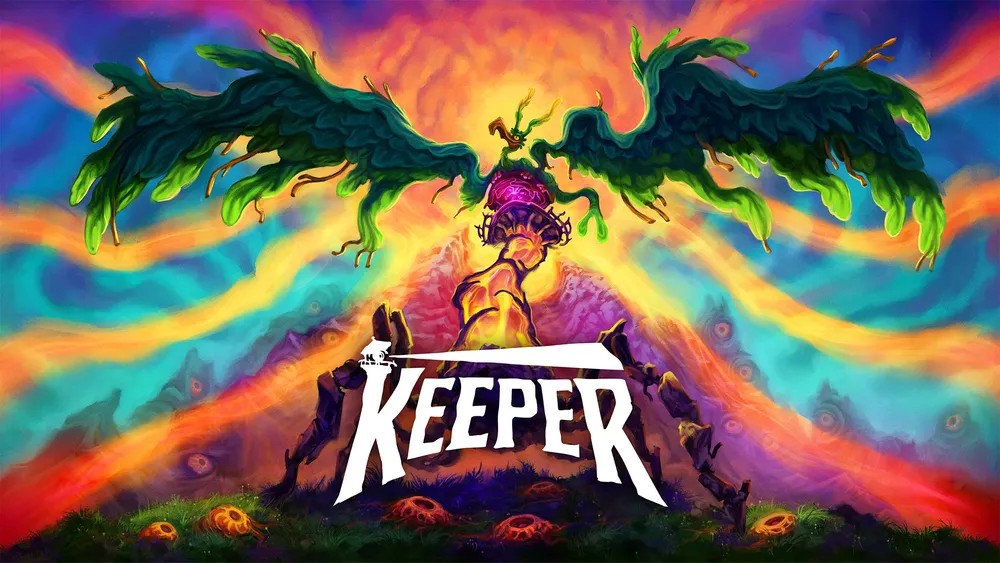
And that’s what makes Double Fine such a legendary studio. Every time we think they’ve run out of ideas, or have encountered some new impassable hurdle, something incredible like Stacking or Keeper comes out of nowhere to blow our minds with novel ideas and artistic expression unlike anything else out there. We may not be seeing a new adventure game in the near future, but whatever’s in store from the newly-indie-again team is sure to be both surprising and entertaining.
- Advertisement
- Help support AGH by advertising with us




0 Comments
Want to join the discussion? Leave a comment as guest, sign in or register in our forums.
Leave a comment