
TOEM 2 review
- 0 Comments
Charming as ever, but a less-inspired sequel can’t recapture the same magic of its predecessor
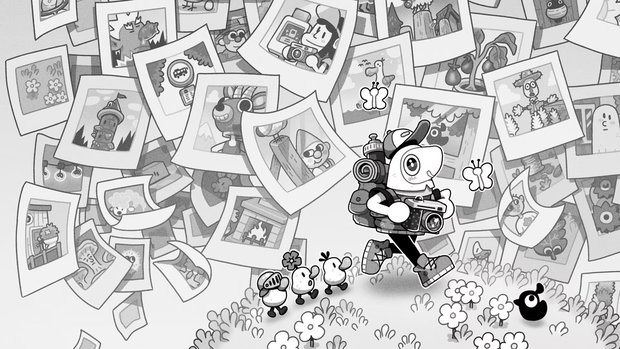
Sometimes, when everything is moving too fast, you need to take a minute to just stop and take in the world around you, or maybe get away from the grind to soak in some new scenery, and snap a few pictures to capture the moment while you’re at it. Coming out in the New Pokemon Snap photography game boom in 2021, TOEM proved to be a charming hit by providing players with just such an opportunity in a charming, whimsical way. Now in 2026, we finally have a sequel in TOEM 2, but while it follows much the same formula, unfortunately it takes a few steps back so it doesn’t quite stack up to its predecessor.
The plot of TOEM 2 is fairly basic. Like in the first game, you play as a small anthropomorphic sheep-person equipped with a camera, on a short bus journey hopping from town to town to take pictures on your way to see the famous titular event. This time, the Toem comes in the form of a rare tree shedding all its leaves at your ultimate destination of Whirlhill. Along the way, you’ll stretch your legs at a few other towns after setting out from your house in Homelandia. At each stop, you’ll use your camera and helpful attitude to assist the local residents, who in turn will give you stamps for your bus pass. Once you get enough stamps, you can then continue on to your next location, or stick around until you’ve finished everything there is to do.
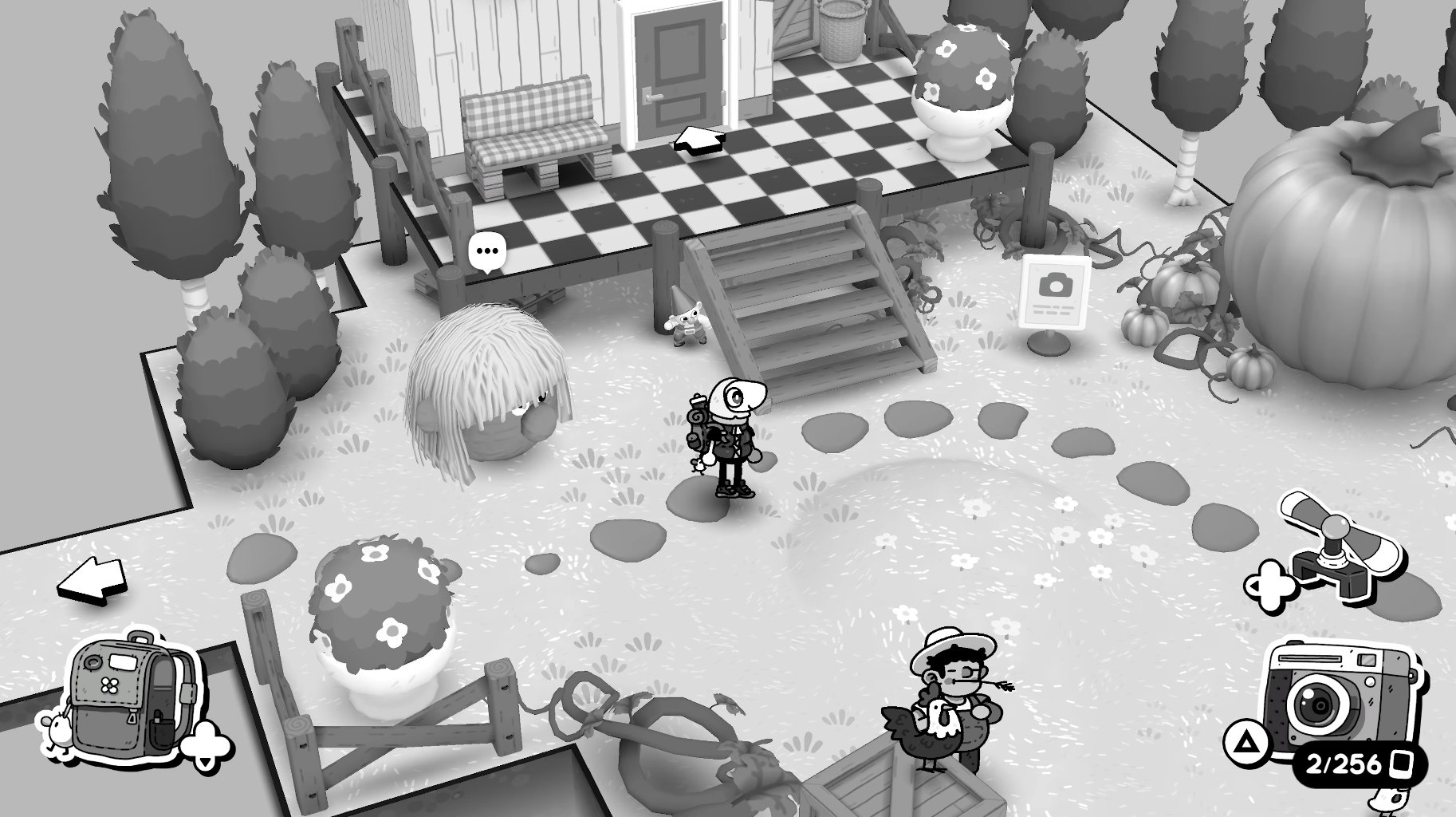
TOEM 2 is presented entirely in black-and-white with the same isometric perspective as the first game, navigated with easy-to-grasp controls via keyboard/mouse or gamepad, but with the addition of a jump option this time. Cropton is the first setting you’ll explore, a rural area with a strong farming theme. Taletorp is more of a woodland locale that also has a rustic, medieval theme; and Deltburg is more of a standard small modern city.
While each region is charming in its own way, unfortunately they’re not particularly memorable or as diverse as they were in TOEM. The characters you assist this time are flat and forgettable, instead of being quirky and funny, existing just to give you something to do, rather than your quests feeling like a part of their story along the way. Most quests simply consist of people asking you to take pictures of things, you do that, and then return to them and show them the photo to complete the quest. For example, one character is sitting on a picnic blanket and staring up at clouds in the sky, then asks you to go around and take pictures of clouds that resemble things and report back to them.
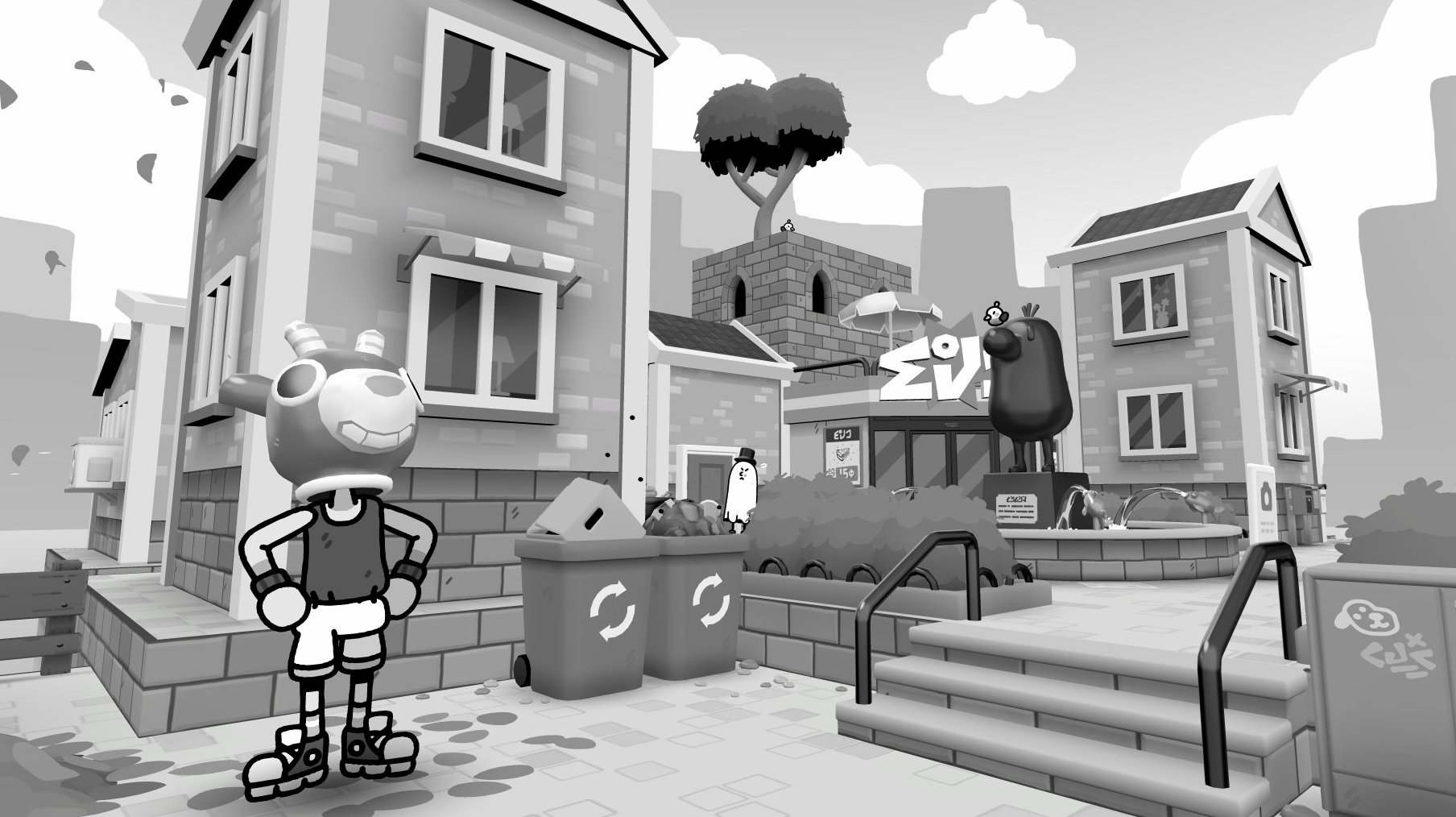
With such a basic plot and characters, the main draw of TOEM 2 is, of course, the photography-based gameplay itself. As with its predecessor, photography here is set out in a very logical way: everything is clearly labeled and the game makes it easy for you to pull up the floating camera for a first-person view, adjust the angle, zoom and focus, and with the click of a button take pictures, even selfies of your sheep-person standing in front of things and striking cute poses. You have the option to save your photos to your album so that you can look back through all the snapshots you’ve taken, as well as any pictures you need to keep for quests.
One of the new features added for the sequel, however, is the extra gameplay add-ons for your camera. In each of the three new areas – but only for use in their respective towns – your camera gains a new function to help out residents, allowing it to work as a pair of scissors, a hammer or a screwdriver. Using each accessory is still very simple: just go into camera mode, look at what you want to use the tool on, and then click the tool button instead of the button to take a picture.
TOEM 2
| Genre: | Adventure |
|---|---|
| Presentation: | Realtime 3D, Isometric/Overhead |
| Perspective: | Third-Person |
| Gameplay: | Quest |
| Control: | Direct Control |
| Game Length: | Short (1-5 hours) |
| Action: | Platforming |
| Difficulty: | Low |
| Theme: | Journey, Photography |
| Graphic Style: | Cartoon |
If you’re thinking that doesn’t sound like actually solving puzzles with photography, you would be right. To be fair, the first game also required several different things to earn stamps that did not involve photography, like wearing a hat that smelled like a hot dog to attract customers for a business. However, relegating the non-photography to strictly these three tool tasks in the sequel feels gimmicky and lacks variety. Getting clogs out of complicated pipe systems with the screwdriver is somewhat tricky, but encountering, say, a sign that needs to be hammered, means all you need to do is point and click where it’s obvious to do so.
Another new addition to the gameplay is a bit of light platforming. The little protagonist can now jump up ladders leaning against buildings or hop across balloons in the sky. At one point I started to muse that it felt like more time and effort went into putting platforming balloons around the areas than actually designing interesting and challenging quests. Now, for those of you objecting to any action in a cozy game about photography, hold your sheep just a minute. The platforming is so incredibly easy, it seems designed for people who are not good at platforming, which makes it very accessible to everyone.
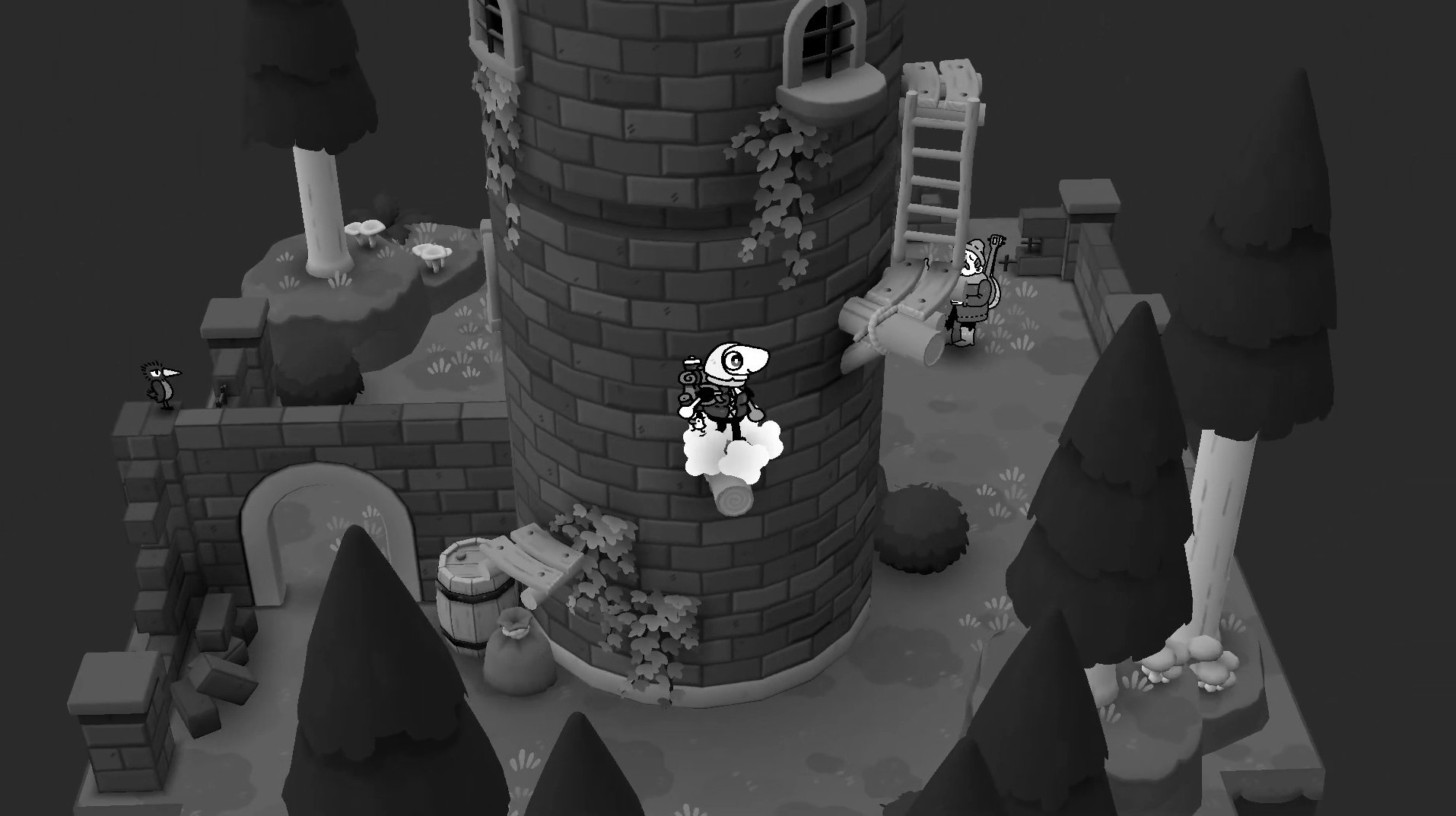
It’s also tedious. True, most of it is not needed to complete quests, and you could finish the game without doing the platforming sections at all, but if you want to get 100% it is mandatory as some of the clothing collectibles are only accessible that way. Unfortunately, because the platforming too presents no real challenge (and I am a self-admitted bad platformer), it just ends up getting very annoying, very quickly. You can’t die, you just fall down; or, if you fall into water, are just transported back to the shore.
There’s one fewer quest area in TOEM 2 than in the first game, as the final location of Whirlhill involves nothing more than walking past characters on your way to take pictures of the Toem phenomenon. Even putting that aside, though, the sequel’s quests are drab and uninspired, requiring little to no thought. Other than the one screwdriver puzzle, I never hesitated in knowing what to do or where to go. There’s no cleverness involved; you just go and use a tool or take a picture of something that isn’t difficult to spot. That’s a sharp contrast to the first game, where I truly struggled (in a good way) with fulfilling some of the requests. Either the way things were worded was tricky to decipher or the items to photograph were harder to find. The only reason I didn’t reach 100% completion for this game in under four hours is because I started to get bored, not because I was stumped.
One of the main appeals of the first game was its cuteness, and the overall vibe here is still cozy and charming, but the art style is slightly different. Your sheep-person and any characters you encounter are all 2D figures in a 3D world, but unlike in TOEM, the scenery no longer has the same bold ink outlines to make them pop and give everything more of a hand-drawn look. The new style, while still low-poly and very cartoony, feels a bit more subdued. While this should, theoretically, make the 2D characters stand out more, instead it just makes them look like they don’t quite belong, leaving the overall effect less immersive and whimsical.
There is no step back musically, as Launchable Socks and Jamal Green return from the original game to provide another excellent, lo-fi music soundtrack for TOEM 2. The score is absolutely delightful and a soothing accompaniment for wandering around and shooting pictures. You can once again collect extra cassette tapes for your Hikelady music player as you complete your quest. Doing so allows you to change the music at will if you have a personal favorite track that you’d like to listen to or are craving something specific.
Final Verdict
Overall, TOEM 2 isn’t a terrible game by any means. If it were a standalone release and not a sequel, I would have been underwhelmed but potentially interested in an improved future installment. Unfortunately, as it represents a step back from the original, I’m more disappointed than anything else. The subtle but noticeable change in art style and the removal of anything resembling a challenge, as well as the addition of tediously easy platforming segments, suck some of the fun out of the experience the second time around. Your sheep-person is still adorable, and the photography mechanics are still clean and easy to use, but the only other thing to really recommend is the great soundtrack. It’s all very light and sweet, and perhaps a nice diversion for when you want to shut off your brain and relax, but for those who feel nostalgic for the original TOEM, you’re probably better off going back and replaying that instead.
Hot take
It shares much of the same appeal as its predecessor, but between the tedious platforming and less interesting quests, TOEM 2 just doesn’t quite click the same way.
Pros
- Great lo-fi soundtrack
- Protagonist is as cute as ever
- Easy-to-pick-up photography gameplay
Cons
- No real challenge or interesting quests
- Tedious (if optional) platforming sections
- Less personality in the background art
Courtney played TOEM 2 on PC using a review code provided by the game's publisher.
- Advertisement
- Help support AGH by advertising with us





0 Comments
Want to join the discussion? Leave a comment as guest, sign in or register in our forums.
Leave a comment